

PM-KUSUM YOJANA Component A: Eligibility, Process & Earnings
The demand for clean, reliable, and sustainable energy is rising across every corner of India, especially in rural regions where agricultural activities depend heavily on access to electricity and stable livelihoods. Recognizing this urgent need, the Government of India launched the PM-KUSUM YOJANA Component A, a pioneering initiative designed to empower farmers and rural institutions through solar energy.
Among all the components of the scheme, PM-KUSUM YOJANA Component A has emerged as one of the most impactful pillars because it offers farmers and community organizations a chance to set up 0.5 MW to 2 MW solar power plants and earn stable, long-term income for up to 25 years.
This guide provides a deep-dive explanation of PM-KUSUM YOJANA Component A—covering eligibility, subsidies, financial potential, state-level implementation, environmental impact, application process, and special insights for Rajasthan and Haryana, the two leading states in decentralized solar plant deployment.
PM-KUSUM Yojana Component A is currently active and has been extended till 31 March 2026. As per the latest government data, more than 10,203 MW of solar capacity has been installed under the PM-KUSUM scheme, benefiting over 20 lakh farmers across India.
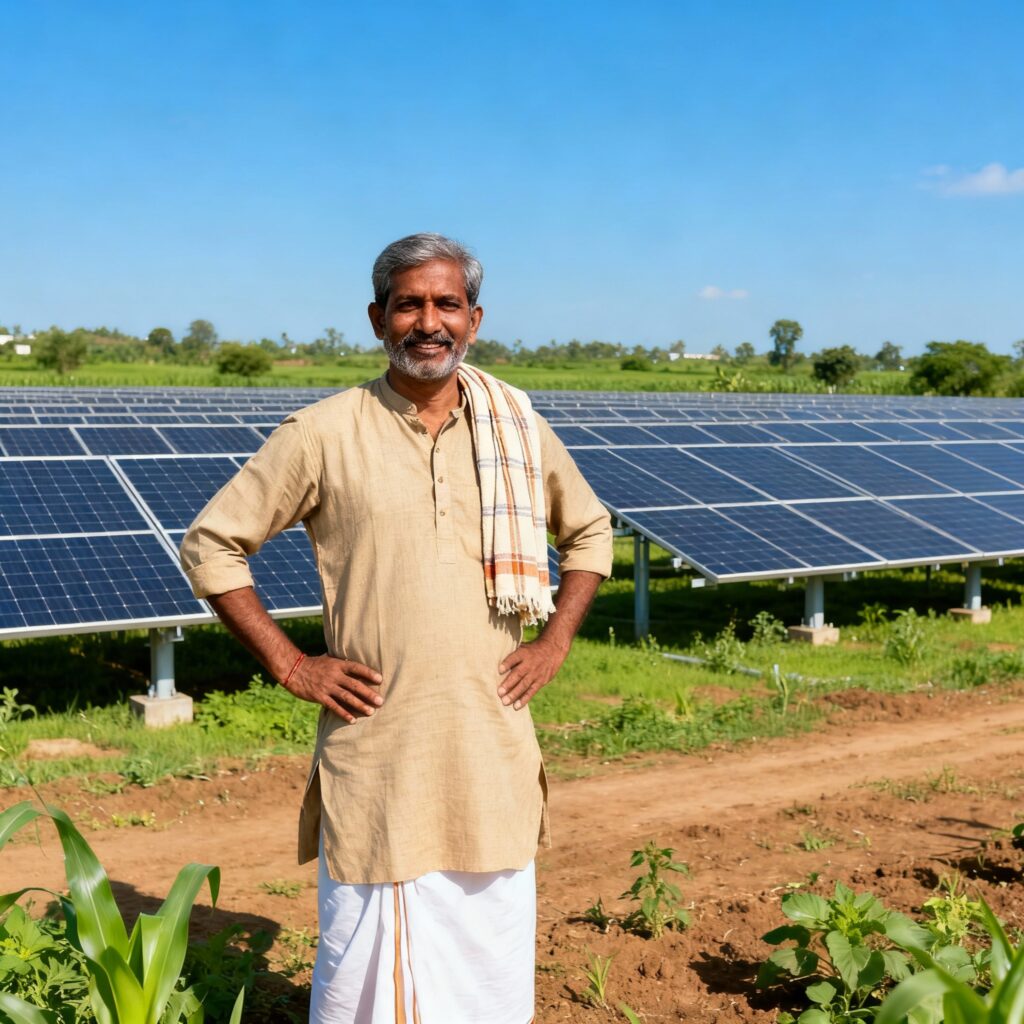
Introduction – Why Farmers Need Clear Guidance on PM-KUSUM YOJANA Component A
The PM-KUSUM YOJANA Component A is one of the biggest opportunities for farmers to earn stable income from solar energy (surya urja).
Yet farmers remain confused about:
Whether their land is eligible for a solar plant
How to apply for the scheme
How much solar income they will actually earn
Whether DISCOM will approve their solar power project
Whether they can get funding without collateral
Who will help with technical drawings & solar EPC work
- Eligibility Criteria for the Solar PM-KUSUM YOJANA Component A
PM-KUSUM Yojana Component A is currently active and has been extended till 31 March 2026. The scheme allows farmers and rural institutions to set up grid-connected solar plants and sell electricity to DISCOMs under long-term agreements. This extension gives new applicants sufficient time to prepare land documents, financial arrangements, and technical approvals.
According to an official written reply in Parliament (Nov 2025), participating farmers may see significant income from Component A solar plants, with illustrative figures of around ₹4.5 lakh per MW per month and up to ₹80,000 per hectare per year for leased land, depending on plant capacity and power purchase terms.
In some states, such as Karnataka, there have been reports of no applications for Component A projects despite the benefits, indicating that awareness and implementation challenges remain.
What is PM-KUSUM YOJANA Component A(Solar Plant Scheme)?
PM-KUSUM YOJANA Component A encourages farmers to build grid-connected solar power plants from 0.5 MW to 2 MW on their land and sell electricity to DISCOM for 25 years.
PM-KUSUM YOJANA Component A is one of India’s most farmer-friendly surya urja projects, as it converts unused land into a profitable, long-term asset.
Key Solar Features
Solar plant size: 500 kW – 2 MW
25-year PPA with DISCOM
Farmers earn steady solar income
Perfect for barren or uncultivable land
Solar panels can be installed on elevated structures, enabling multi-use
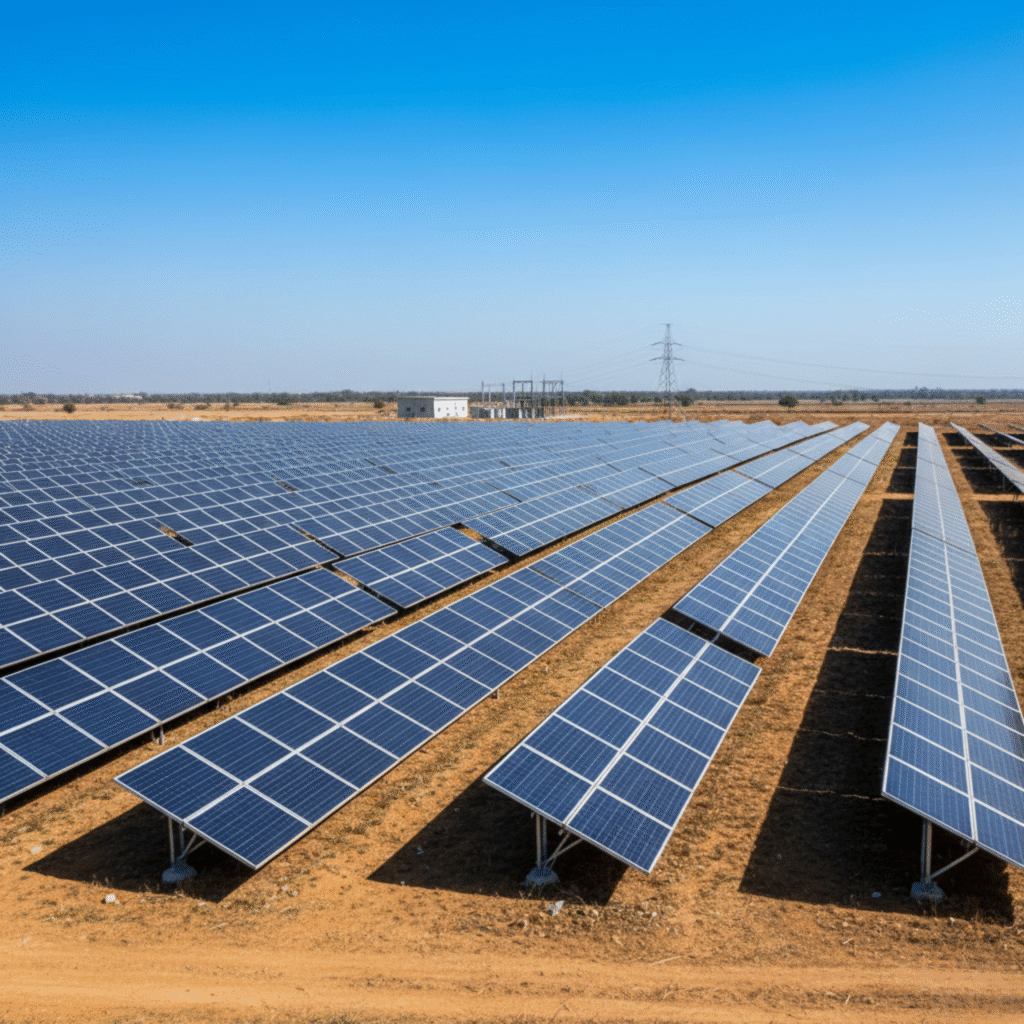
Eligibility Criteria for the Solar PM-KUSUM YOJANA Component A
Who Can Apply?
The following are eligible to install a solar plant:
1. Individual farmers 2. Groups/cooperatives 3. Panchayats 4. FPOs 5. Solar developers partnering with farmers
Land Requirements for a Solar Power Project
For a 1 MW solar plant:
1. 3-4 acres required 2. Land must be within 5–10 km of a 33/11 kV substation 3. Should be dispute-free 4.Should have clear ownership
Unused land is ideal for generating surya urja income.
DISCOM Requirements
A solar grid-connected project requires:
1. Available capacity at substation 2. Technical feasibility approval 3. Willingness to sign PPA
Innocepts Solar manages all DISCOM coordination on behalf of farmers.
Step-by-Step Solar Application Process
Step 1 – Solar Land Feasibility Check
This includes:
1.Distance from nearest substation 2. Checking capacity for solar evacuation 3. Soil suitability for mounting structures
Innocepts Solar prepares a detailed feasibility report to ensure the solar plant gets approved.
Step 2 – Register on State Solar Portal
Farmers must enter:
1.Land location 2. Solar plant capacity 3.Applicant details
A mistake here can delay the entire surya urja project.
Step 3 – Upload Required Solar Documents
Innocepts helps prepare:
1.Aadhaar 2. PAN 3.Land papers 4.Bank passbook 5.Land coordinates
Poor documentation is the #1 reason solar applications get rejected.
Step 4 – Signing the Solar PPA with DISCOM
DISCOM issues:
1.Letter of Award 2.Draft PPA 3.Final PPA for 25 years
This guarantees solar income for the long term.
Step 5 – Solar EPC, Construction & Commissioning
Activities include:
1.Solar engineering design 2.Module & inverter 3.procurement Mounting structures 4. Civil + electrical work 5.Grid connectivity
Innocepts Solar is a complete solar EPC service provider delivering end-to-end execution.
Required Documents for Solar PM-KUSUM YOJANA Component A
| Document | Solar Purpose |
|---|---|
|
Aadhaar |
Identity |
|
PAN |
Financial compliance |
|
Land Records |
Proof for solar plant installation |
|
Land Map |
Feasibility study |
|
Coordinates |
Substation distance check |
|
Bank Passbook |
For solar revenue payments |
|
NOC (if required) |
Local approval |
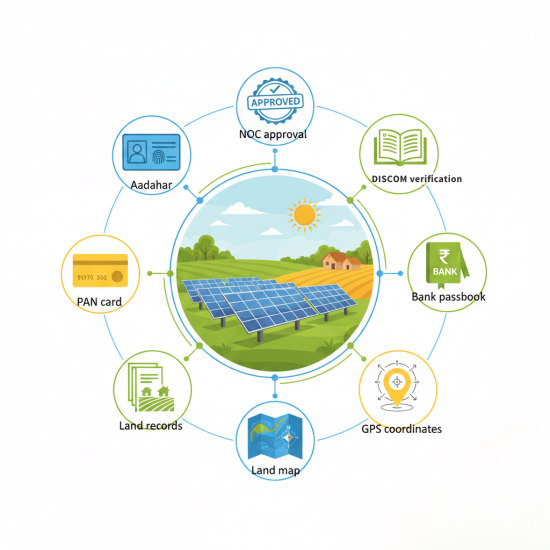
Innocepts ensures every solar document under the PM-KUSUM YOJANA Component A scheme is accurate and ready for submission. Our team provides complete support for PM-KUSUM YOJANA Component A applications, ensuring a smooth and error-free process for all applicants.
Expected Solar Earnings & Business Model
How Do Farmers Earn From a Solar Plant?
Income depends on:
1.Solar generation 2. Tariff approved by DISCOM 3.Solar plant capacity
1 MW Solar Plant Example
1.Annual generation: 16–18 lakh units 2.Tariff assumed: ₹3 per unit 3.Annual solar revenue 16,00,000 × ₹3 = ₹48,00,000
25-Year Solar Income:
₹12–14 crore
Even after O&M and financing, farmers earn very high long-term profits.
Innocepts Solar Helps Farmers Get Collateral-Free Solar Funding in Just 15 Days
Many farmers hesitate because they fear:
1.High solar investment 2.Requirement of collateral 3.Complicated bank procedures
But here’s the good news:
Innocepts Solar arranges project funding WITHOUT COLLATERAL—approved in just 15 days.
Why so fast?
Because Innocepts has strong tie-ups with top financial institutions that support solar projects.
Benefits for Farmers
1. No land mortgage 2. No heavy security 3. Easy EMIs 4. Fast processing
This removes the biggest barrier preventing farmers from entering the surya urja business.
Common Challenges Farmers Face in Solar KUSUM Projects
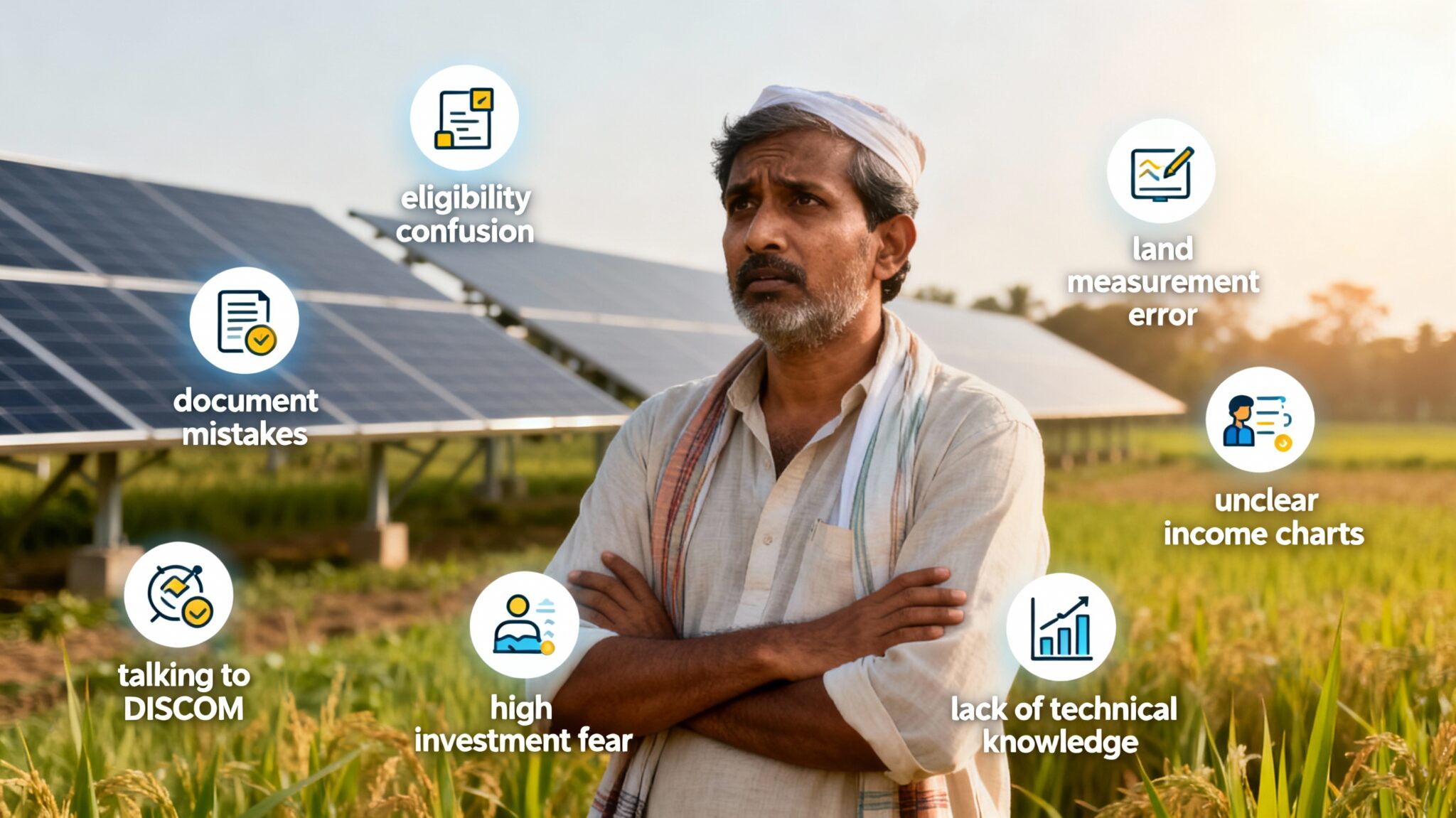
Many farmers struggle while applying for PM-KUSUM YOJANA Component A solar projects due to unclear eligibility rules, incorrect assessment of their land’s suitability, and mistakes in required paperwork. Talking to DISCOM officials can also feel difficult without proper guidance. PM-KUSUM YOJANA Component A added to this, fear of high initial investment, confusion about actual solar earnings, and limited technical understanding make the process even more challenging. These issues often slow down approvals or stop projects before they even begin.
Confusion about eligibility
Wrong land feasibility calculations
Errors in solar documentation
Difficulty talking to DISCOM
High upfront solar investment fears
No clarity about real solar income
Lack of technical knowledge
These hurdles often delay or cancel solar projects.
For official guidelines and policy updates related to PM-KUSUM Yojana Component A, farmers can also refer to the Ministry of New and Renewable Energy (MNRE) website.
How Innocepts Solar Pvt. Ltd. Solves Every Challenge
Innocepts Solar is positioned as the backbone for every farmer entering the solar business under PM-KUSUM YOJANA Component A.
Here’s how:
- Feasibility Report & Solar Land Analysis
Ensures:
1.Correct substation distance 2. Proper grid connectivity 3. Accurate solar design potential
- Minimum Distance Check from Substation
Avoids technical rejection by DISCOM.
- Complete Solar Documentation
Innocepts prepares:
1.Technical drawings 2. Application files 3.Portal submissions 4. DPR reports
100% error-free.
- Solar Engineering Drawings & Designs
High-quality designs ensure maximum generation.
- Project Approvals & Solar Consultancy
Farmers don’t need to visit offices—Innocepts handles everything.
- DISCOM Liasoning for Solar Projects
Includes:
1.Feasibility approvals 2.Load connectivity 3. PPA coordination 4. Inspection 5. Final commissioning
- Minimum Project Costing
Affordable and transparent pricing.
- Full EPC Services (Engineering, Procurement, Construction)
Innocepts Solar manages the complete solar plant setup.
- Solar Operations & Maintenance (O&M)
Ensures:
1.Maximum performance 2.Fault-free operation 3.Regular maintenance
- Collateral-Free Solar Funding in 15 Days
A game-changing benefit for farmers.
FAQ
How much land is needed for a 1 MW solar plant?
Around 3-4 acres depending on layout.
Can barren land be used for a solar project?
Yes! Ideal for solar installations.
Can I get financing for a solar plant?
Yes—Innocepts provides 15-day collateral-free funding.
What is the solar earnings potential?
₹45–50 lakh per year for a 1 MW solar project.
What types of land are allowed under Component A?
The scheme allows:
- Barren land
- Unused agricultural land
- Pasture land (with approval)
- Leased land (as per policy)
Land must be located close to a substation for technical feasibility.
Is Component A risk-free for farmers?
It is considered very low-risk because:
- DISCOM provides a guaranteed PPA
- Production is stable
- Maintenance needs are minimal
- Land ownership remains with farmer
It is one of the safest long-term income options for rural India.
What is PM-KUSUM YOJANA Component A?
Component A allows farmers or developers to install 0.5–2 MW decentralized solar power plants and sell electricity for 25 years.
- 2–4 months for approvals
- 5–7 months for construction and commissioning
Total timeline: 7–12 months depending on state processes.
What is the environmental impact of Component A projects?
Each 1 MW solar plant reduces approximately:
- 1,300–1,500 tons of CO₂ annually
- Improves air quality
- Reduces dependency on fossil fuel electricity
- Supports India’s renewable energy goals
It benefits both rural communities and the planet.


