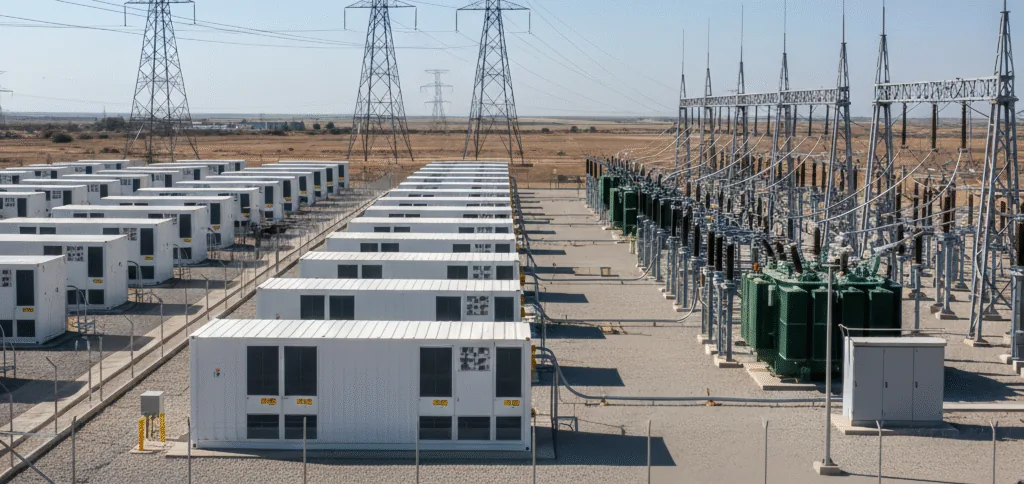
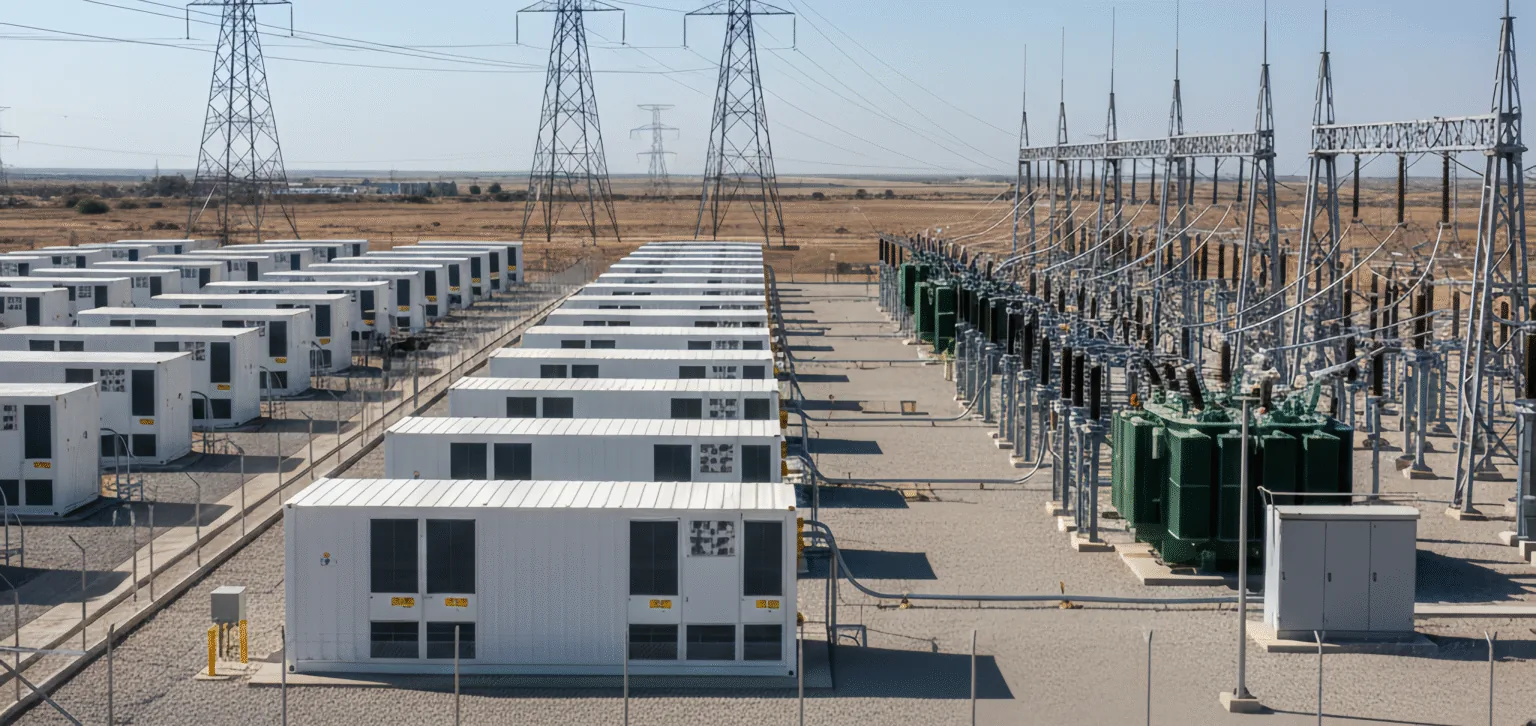
Battery Energy Storage System (BESS) Explained for Indian Power Projects
India’s power sector is at a structural inflection point. Rapid renewable capacity addition, tightening grid codes, and increasing demand volatility are forcing utilities and developers to rethink how electricity is generated, dispatched, and balanced. At the center of this transition sits one critical technology: the Battery Energy Storage System (BESS).
A Battery Energy Storage System (BESS) is no longer an experimental add-on. For Indian utilities, DISCOMs, renewable developers, and grid operators, BESS is fast becoming core infrastructure—much like substations or transmission lines were in earlier decades.
This article provides a practitioner-level explanation of BESS, grounded in Indian grid realities, regulations, and project experience.
What is a Battery Energy Storage System (BESS)?
A Battery Energy Storage System (BESS) is an integrated system that stores electrical energy in electrochemical batteries and discharges it when required to support grid operations, renewable integration, or commercial objectives.
In Indian power projects, BESS typically operates at grid-scale or utility-scale, connected at transmission or distribution voltage levels, and dispatched either by grid operators or project owners.
At its core, a BESS enables:
Time-shifting of electricity
Fast-response grid support
Firming of variable renewable energy
Time-shifting of electricity
Fast-response grid support
Firming of variable renewable energy
Unlike conventional peaking plants, battery storage responds in milliseconds, making it uniquely suited for modern grid challenges.
Key Components of a Battery Energy Storage System (BESS)
Understanding BESS requires looking beyond the battery itself. A utility-scale BESS is an integrated power asset.
Battery Packs
Typically lithium-ion (LFP increasingly preferred in India)
Defined by energy capacity (MWh) and power rating (MW)
Designed for high cycle life under Indian temperature conditions
Typically lithium-ion (LFP increasingly preferred in India)
Defined by energy capacity (MWh) and power rating (MW)
Designed for high cycle life under Indian temperature conditions
Power Conversion System (PCS)
Converts DC battery power to AC grid power and vice versa
Enables active/reactive power control
Critical for grid code compliance
Converts DC battery power to AC grid power and vice versa
Enables active/reactive power control
Critical for grid code compliance
Battery Management System (BMS)
Monitors cell voltage, temperature, and health
Prevents thermal runaway
Directly impacts safety and asset life
Monitors cell voltage, temperature, and health
Prevents thermal runaway
Directly impacts safety and asset life
Energy Management System (EMS)
The “brain” of the BESS
Optimizes dispatch based on tariffs, grid signals, and SOC
Interfaces with SLDCs, RLDCs, or plant SCADA
The “brain” of the BESS
Optimizes dispatch based on tariffs, grid signals, and SOC
Interfaces with SLDCs, RLDCs, or plant SCADA
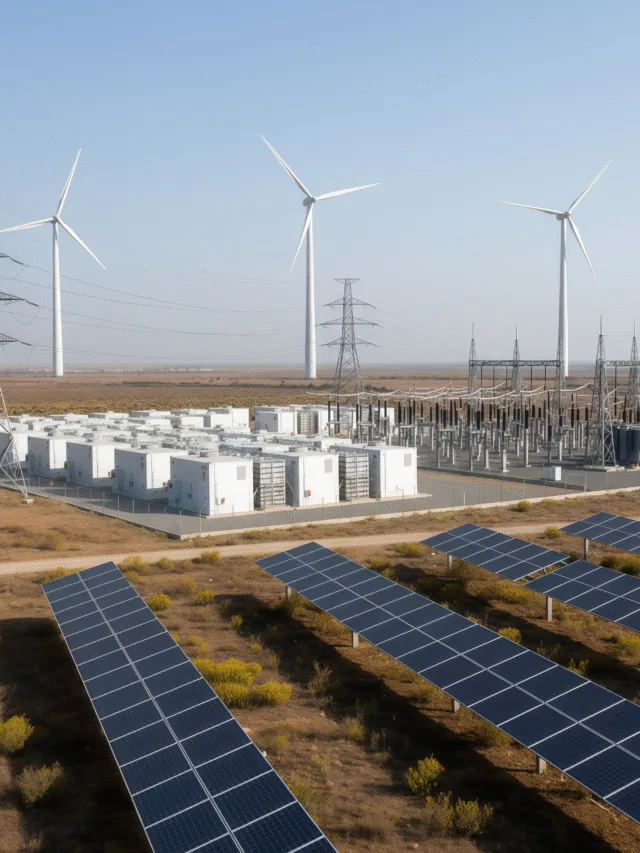
Why BESS is Critical for India’s Power Sector
India’s grid is undergoing three simultaneous shifts:
- High renewable penetration
- Declining system inertia
- Increasing peak-demand stress.
Renewable Variability
Solar and wind capacity additions are outpacing conventional generation. While beneficial, this introduces intermittency that conventional coal and gas plants were not designed to manage alone.
DISCOM Operational Stress
DISCOMs face:
- Peak power procurement costs
- Renewable curtailment penalties
- Voltage and frequency management challenges
Grid Code Evolution
New CEA grid codes emphasize:
- Frequency response
- Ramp-rate control
- Ancillary services
BESS in India directly addresses these issues by providing fast, flexible, and dispatchable capacity without fuel dependency.
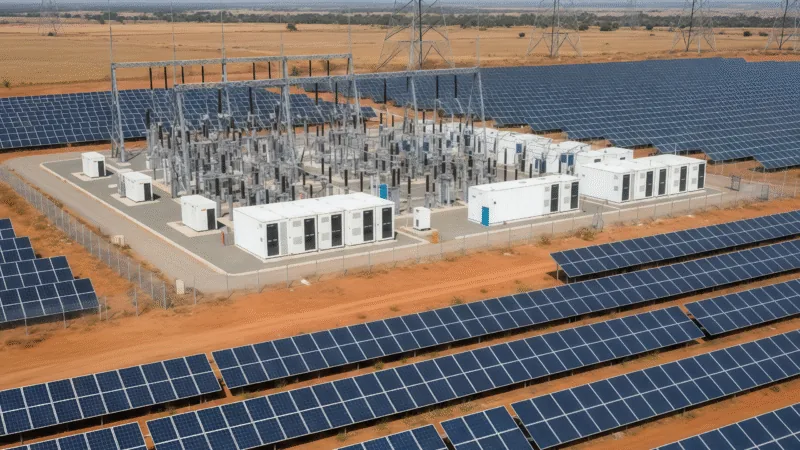
BESS Applications in Indian Power Projects
Renewable Integration
Renewable energy storage in India is now essential rather than optional.
Use cases include:
Solar + BESS for evening peak supply
Wind smoothing in high-variability corridors
Hybrid renewable-battery projects under SECI tenders
Solar + BESS for evening peak supply
Wind smoothing in high-variability corridors
Hybrid renewable-battery projects under SECI tenders
BESS allows renewable plants to behave like firm power sources.
Grid Balancing & Frequency Regulation
India’s grid frequency must be maintained tightly around 50 Hz. With reduced inertia, deviations are increasing.
Grid-scale battery energy storage provides:
Primary frequency response
Fast ramping within milliseconds
Reduced reliance on thermal spinning reserves
Primary frequency response
Fast ramping within milliseconds
Reduced reliance on thermal spinning reserves
POSOCO and RLDCs increasingly recognize BESS as a critical ancillary asset.
Peak Shaving & Load Shifting
For DISCOMs, peak power procurement is expensive and politically sensitive.
Battery storage for power projects enables:
Charging during off-peak or surplus renewable periods
Discharging during evening or seasonal peaks
Reduction in short-term market exposure
Charging during off-peak or surplus renewable periods
Discharging during evening or seasonal peaks
Reduction in short-term market exposure
This application alone can materially improve DISCOM financials.
Policy & Regulatory Landscape for BESS in India
India’s policy environment for BESS is evolving rapidly.
Key developments include:
MNRE guidelines recognizing energy storage as part of RE capacity
CEA regulations on standalone and hybrid storage systems
SECI tenders for standalone and renewable-linked BESS
Waiver of ISTS charges for storage-linked renewable projects (time-bound)
MNRE guidelines recognizing energy storage as part of RE capacity
CEA regulations on standalone and hybrid storage systems
SECI tenders for standalone and renewable-linked BESS
Waiver of ISTS charges for storage-linked renewable projects (time-bound)
However, challenges remain:
Lack of unified tariff frameworks
Limited clarity on ownership models (DISCOM vs IPP vs third-party)
Evolving market mechanisms for ancillary services
Lack of unified tariff frameworks
Limited clarity on ownership models (DISCOM vs IPP vs third-party)
Evolving market mechanisms for ancillary services
Authoritative reference:-
Ministry of New and Renewable Energy (MNRE)
Commercial & Financial Benefits of BESS
From a project finance perspective, Battery Energy Storage System (BESS) offers multiple value streams.
1. For Utilities & DISCOMs
Lower peak procurement costs
Improved grid reliability
Deferred network investments
Lower peak procurement costs
Improved grid reliability
Deferred network investments
2. For Developers & Investors
Enhanced project bankability
Access to capacity-linked revenues
Portfolio risk diversification
Enhanced project bankability
Access to capacity-linked revenues
Portfolio risk diversification
3. For Grid Operators
Improved system stability
Reduced curtailment
Faster contingency response
Improved system stability
Reduced curtailment
Faster contingency response
As markets mature, revenue stacking will be central to BESS viability.
Challenges & Risk Factors
Despite its promise, BESS deployment in India faces real constraints.
1. Land & Siting
Proximity to substations is critical
Urban land availability remains limited
Proximity to substations is critical
Urban land availability remains limited
2. Safety & Thermal Risk
Fire incidents globally have increased scrutiny
Robust BMS, fire suppression, and O&M protocols are mandatory
Fire incidents globally have increased scrutiny
Robust BMS, fire suppression, and O&M protocols are mandatory
3. Battery Degradation
Indian climate accelerates degradation if poorly designed
Contract structures must account for capacity fade
Indian climate accelerates degradation if poorly designed
Contract structures must account for capacity fade
4. Regulatory Uncertainty
Market rules are still evolving
Revenue certainty remains a concern for lenders
Market rules are still evolving
Revenue certainty remains a concern for lenders
Future Outlook of BESS in India (2030 and Beyond)
By 2030, India is expected to require tens of GWh of battery storage to support its renewable targets.
Key trends include:
Shift toward LFP and sodium-ion chemistries
Standalone merchant BESS projects
Integration with real-time power markets
Increased DISCOM-owned storage assets
Shift toward LFP and sodium-ion chemistries
Standalone merchant BESS projects
Integration with real-time power markets
Increased DISCOM-owned storage assets
BESS in India will move from pilot projects to core grid infrastructure—similar to how gas turbines were viewed two decades ago.
Conclusion: BESS as the Backbone of India’s Energy Transition
The Battery Energy Storage System (BESS) is no longer a future concept—it is a present-day necessity for Indian power projects.
For utilities, it offers operational resilience.
For developers, it unlocks new revenue models.
For grid operators, it ensures stability in a low-inertia system.
As India accelerates toward a cleaner, more flexible power system, utility-scale BESS will define the next phase of grid evolution. Stakeholders who understand, plan, and deploy storage strategically today will shape the power sector of tomorrow.
Learn more about our energy storage consulting services here: Innocepts Solar
FAQ's
A Battery Energy Storage System (BESS) stores electricity and supplies it later to support the power grid, renewable energy, and peak demand in India.
BESS helps manage solar and wind variability, reduces power shortages, and keeps grid frequency stable as renewable energy grows.
BESS charges during low-demand hours and supplies power during evening or seasonal peaks, reducing expensive power purchases.
BESS is not mandatory yet, but it is increasingly required in SECI tenders and preferred by DISCOMs for firm power supply.
Most Indian BESS projects are designed for 2 to 4 hours of continuous power supply.
Lithium Iron Phosphate (LFP) batteries are most used because they are safer and perform better in India’s hot climate.
BESS operation is usually controlled by DISCOMs, grid operators (SLDC/RLDC), or plant owners based on the project type.
Yes, BESS lowers peak power costs, reduces renewable curtailment, and improves overall grid efficiency.
Modern BESS systems use advanced monitoring, cooling, and fire protection systems to ensure safe operation.
Yes, BESS is expected to become core grid infrastructure as India increases renewable energy and modernizes its power system under policies from Ministry of New and Renewable Energy.