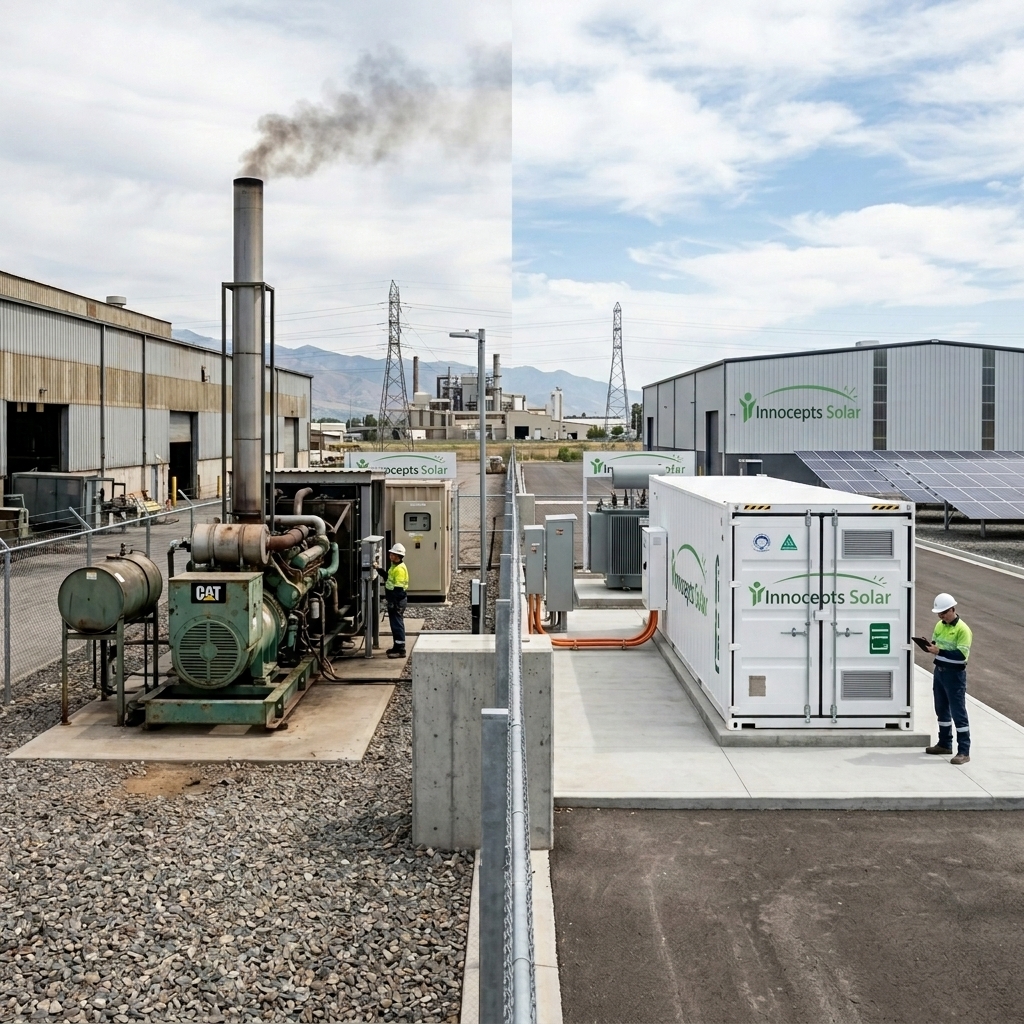
Rising diesel prices, increasing grid instability, and constant ROI pressure are forcing industrial decision-makers to re-evaluate backup power solutions. A diesel generator still looks �cheap� on day one�but the real question is what you pay over 10 years, including fuel, maintenance, downtime risk, and carbon emissions compliance.
That�s where the Diesel Generator vs BESS comparison becomes decisive. battery energy storage systems can shift your economics from �fuel-burning standby� to peak shaving, demand charge reduction, energy arbitrage, and grid resilience�all with predictable operating costs.
If you�re planning an upgrade for a plant, warehouse, or commercial campus, start with a structured decision path under your site�s energy objectives and constraints via commercial energy solutions. Innocepts Solar typically begins with load profiling + outage history + tariff mapping to model the highest-return configuration. Fuel price volatility is a major driver of diesel economics, and global fuel price datasets highlight how quickly costs can change.
A proper lifecycle cost comparison looks beyond CapEx and asks: How much does each system cost to �own + operate + rely on� across a decade?
CapEx (Upfront Cost)
Diesel Generator (DG): Lower initial cost (generator + alternator + ATS + civil + exhaust + tank + acoustic).
BESS: Higher initial cost (battery container/racks + PCS/inverter + EMS + HVAC + fire safety + installation).
Diesel Generator (DG): Lower initial cost (generator + alternator + ATS + civil + exhaust + tank + acoustic).
BESS: Higher initial cost (battery container/racks + PCS/inverter + EMS + HVAC + fire safety + installation).
OpEx (Operating Cost)
DG: Fuel + oil + filters + spares + periodic overhauls + testing runs.
BESS: Low routine O&M (monitoring, HVAC service), with planned component replacements depending on duty cycle.
DG: Fuel + oil + filters + spares + periodic overhauls + testing runs.
BESS: Low routine O&M (monitoring, HVAC service), with planned component replacements depending on duty cycle.
What the 10-year math usually reveals
If your DG runs only for rare outages, its economics can be acceptable.
If you run diesel for frequent outages, high peak tariffs, or daily power quality issues, diesel becomes a high-LCOE asset.
BESS creates value even when the grid is �on� through peak shaving and demand charge reduction�so it�s not idle capital.
If your DG runs only for rare outages, its economics can be acceptable.
If you run diesel for frequent outages, high peak tariffs, or daily power quality issues, diesel becomes a high-LCOE asset.
BESS creates value even when the grid is �on� through peak shaving and demand charge reduction�so it�s not idle capital.
For installed storage costs, major global reporting shows battery storage costs have fallen dramatically over the last decade, strengthening the BESS ROI case.
To evaluate the right architecture (standalone storage vs solar+storage), see Battery Energy Storage Systems and model the best-fit duration (1�4 hours for demand/peaks; 4�8 hours for resilience).
Innocepts Solar typically builds side-by-side 10-year cashflows: diesel-only vs BESS-only vs hybrid energy systems, then selects the minimum-risk, maximum-return path.
Diesel Generator Cost Analysis fails when it assumes �fuel cost is constant� and �maintenance is minor.� In reality, long-run diesel economics are shaped by five compounding drivers:
Fuel price volatility: Diesel rates fluctuate with crude cycles, FX, taxes, and supply shocks�directly changing ?/kWh delivered cost. World fuel price databases track wide cross-country variability and ongoing changes.
Part-load penalty: DGs burn more fuel per kWh at low loading. Oversized gensets quietly inflate operating cost.
Maintenance schedules: Oil changes, filters, injectors, batteries, coolant, belts, and periodic overhauls are non-negotiable for reliability.
Downtime risk: A �backup� system that fails during an outage creates production loss�often larger than the fuel bill.
Carbon compliance costs: Even where direct carbon pricing isn�t applied, ESG scoring, customer audits, and lender pressure can penalize diesel-heavy operations.
Fuel price volatility: Diesel rates fluctuate with crude cycles, FX, taxes, and supply shocks�directly changing ?/kWh delivered cost. World fuel price databases track wide cross-country variability and ongoing changes.
Part-load penalty: DGs burn more fuel per kWh at low loading. Oversized gensets quietly inflate operating cost.
Maintenance schedules: Oil changes, filters, injectors, batteries, coolant, belts, and periodic overhauls are non-negotiable for reliability.
Downtime risk: A �backup� system that fails during an outage creates production loss�often larger than the fuel bill.
Carbon compliance costs: Even where direct carbon pricing isn�t applied, ESG scoring, customer audits, and lender pressure can penalize diesel-heavy operations.
For plants that depend on DG for industrial power reliability (not just emergencies), Innocepts Solar often recommends a shift toward �DG as last-resort� and storage as the primary daily optimizer. Explore configuration options under diesel generator solutions to right-size and reduce runtime.
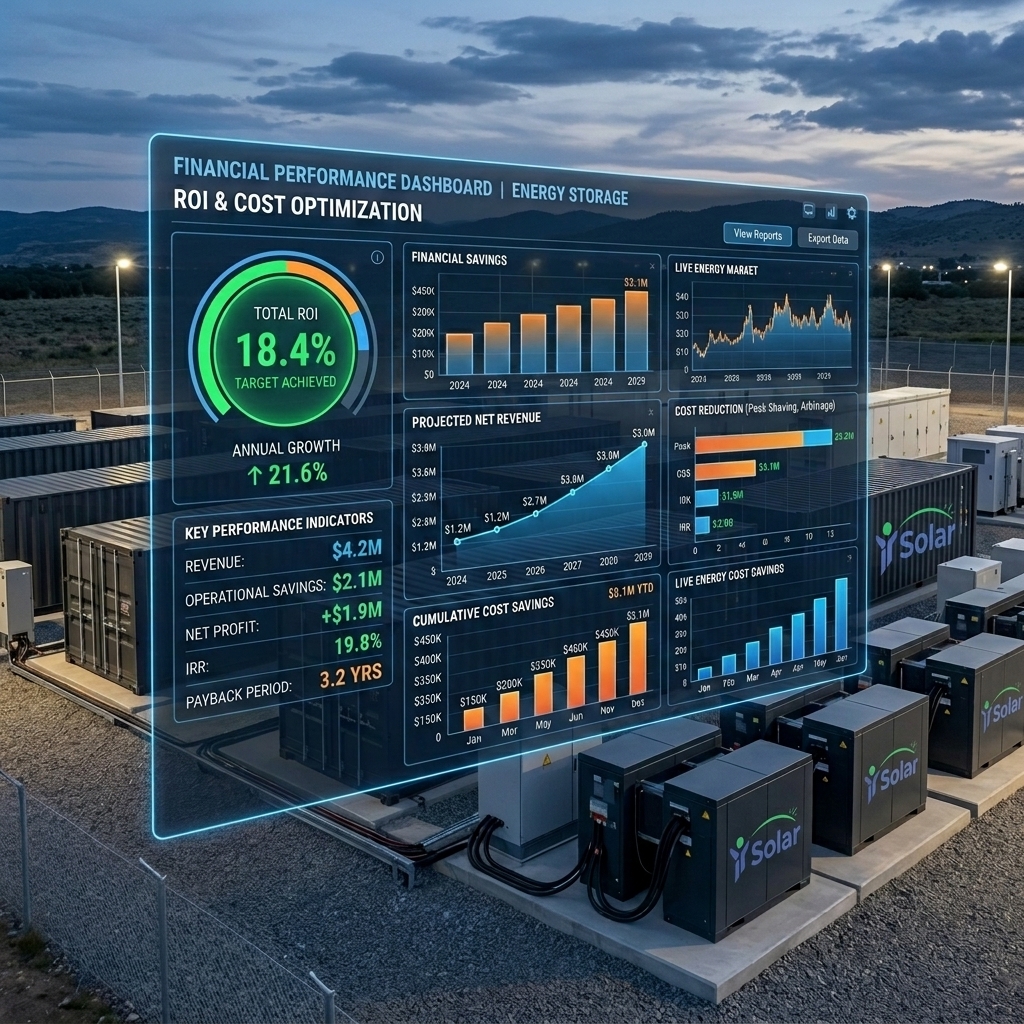
This is where Diesel Generator vs BESS becomes a finance decision�not a technology debate.
ROI formula (simple, decision-ready)
ROI (%) = (Total Net Benefit over period � Initial Investment) � 100
Where Total Net Benefit includes:
demand charge reduction savings
peak shaving savings
avoided diesel fuel + maintenance
avoided downtime losses (where measurable)
energy arbitrage gains (where tariffs support it)
demand charge reduction savings
peak shaving savings
avoided diesel fuel + maintenance
avoided downtime losses (where measurable)
energy arbitrage gains (where tariffs support it)
Payback period
Payback (years) = Net Installed Cost � Annual Net Savings
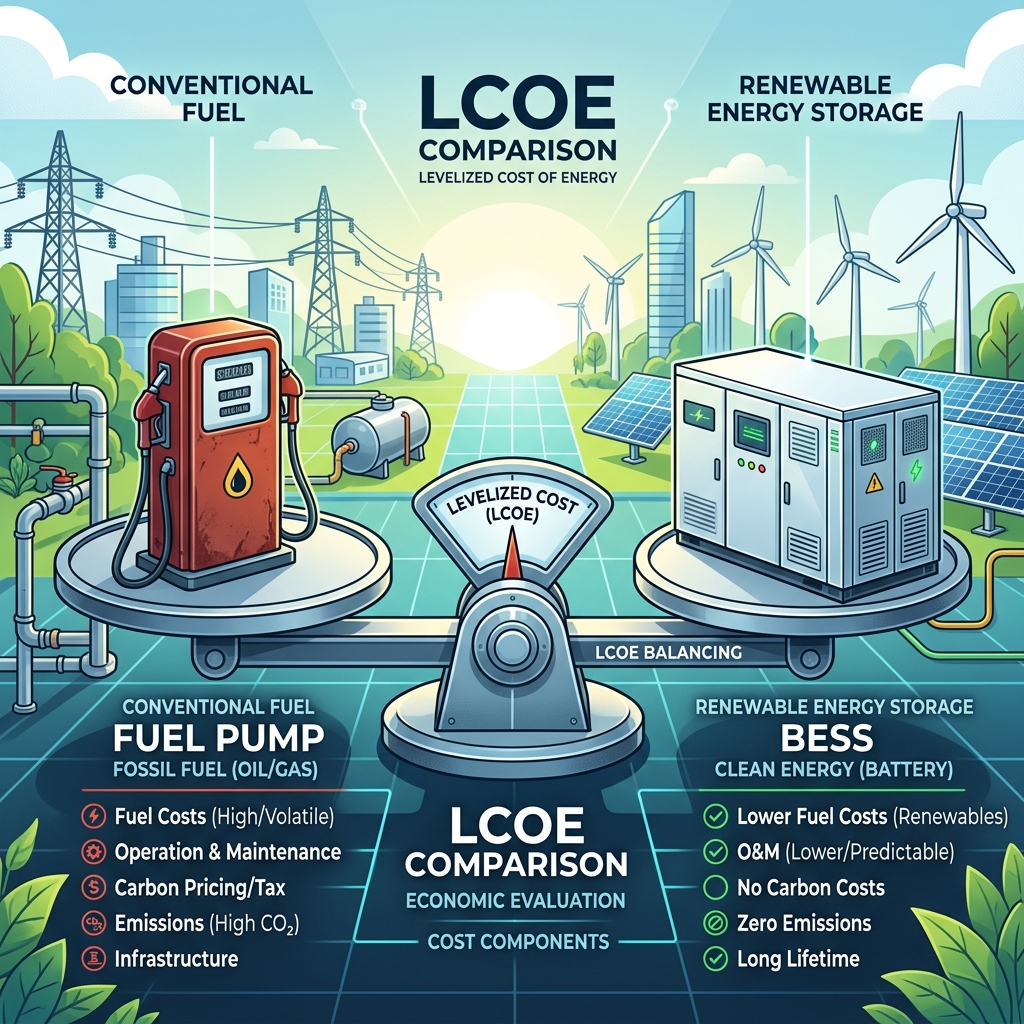
LCOE (and what it means here)
Levelized Cost of Energy (LCOE) is the lifetime cost per unit of energy delivered. For BESS, many analysts use �levelized cost of storage,� but your business lens is the same:
DG LCOE rises with fuel + runtime + maintenance
BESS effective LCOE improves when it earns value daily (peak shaving + arbitrage)
DG LCOE rises with fuel + runtime + maintenance
BESS effective LCOE improves when it earns value daily (peak shaving + arbitrage)
To anchor realistic storage cost/performance assumptions, NREL�s Annual Technology Baseline provides reference ranges by duration and application.
For higher ROI stacks (solar self-consumption + storage + peak control), evaluate solar plus storage solutions�a common route Innocepts Solar uses to combine resilience with recurring bill savings.
Battery Energy Storage Systems deliver business value in more ways than �backup.� For most commercial sites, the biggest drivers are:
Demand charge reduction: Lower your monthly peak demand, improving tariff outcomes without curtailing production.
Peak shaving: Discharge during peak windows to avoid expensive grid import blocks.
Grid resilience: Instant response for voltage dips, frequency events, and short outages�protecting sensitive loads.
Scalability: Add modules as load grows or operating patterns change.
Hybrid energy systems compatibility: BESS works with solar, DG, and grid in a coordinated EMS strategy.
Demand charge reduction: Lower your monthly peak demand, improving tariff outcomes without curtailing production.
Peak shaving: Discharge during peak windows to avoid expensive grid import blocks.
Grid resilience: Instant response for voltage dips, frequency events, and short outages�protecting sensitive loads.
Scalability: Add modules as load grows or operating patterns change.
Hybrid energy systems compatibility: BESS works with solar, DG, and grid in a coordinated EMS strategy.
McKinsey�s analysis of battery energy storage systems in commercial/factory contexts highlights how storage is increasingly used for peak shaving, renewables integration, and backup applications.
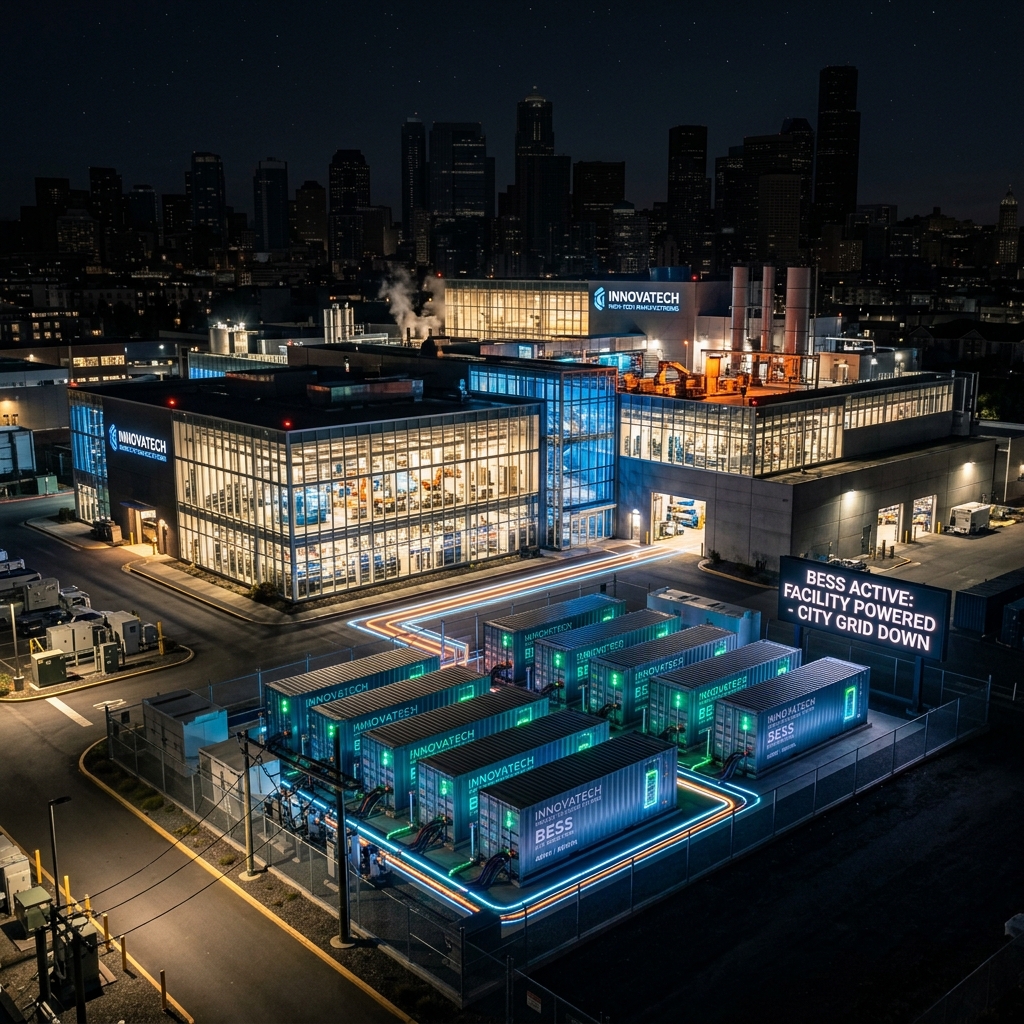
For resilient architectures (critical loads + UPS-like response), see industrial power backup�a design approach Innocepts Solar commonly implements for manufacturing lines and mission-critical facilities.
Sustainability is now tied to contracts, financing, and compliance�not just branding.
Carbon emissions compliance: Diesel generators add local NOx/PM and CO2; regulations and reporting requirements can restrict non-emergency runtime.
ESG goals: Customers and investors increasingly evaluate emissions intensity and resilience strategy.
Sustainability reporting: BESS enables measurable reductions in diesel runtime and supports renewable energy transition narratives.
Carbon emissions compliance: Diesel generators add local NOx/PM and CO2; regulations and reporting requirements can restrict non-emergency runtime.
ESG goals: Customers and investors increasingly evaluate emissions intensity and resilience strategy.
Sustainability reporting: BESS enables measurable reductions in diesel runtime and supports renewable energy transition narratives.
Regulatory requirements for stationary engines can be complex by engine class and usage category; compliance frameworks illustrate the tightening landscape around stationary engine operations.
To align backup strategy with ESG and long-term policy direction, use renewable energy transition planning�an area where Innocepts Solar supports documentation-ready roadmaps for auditors, lenders, and procurement teams.
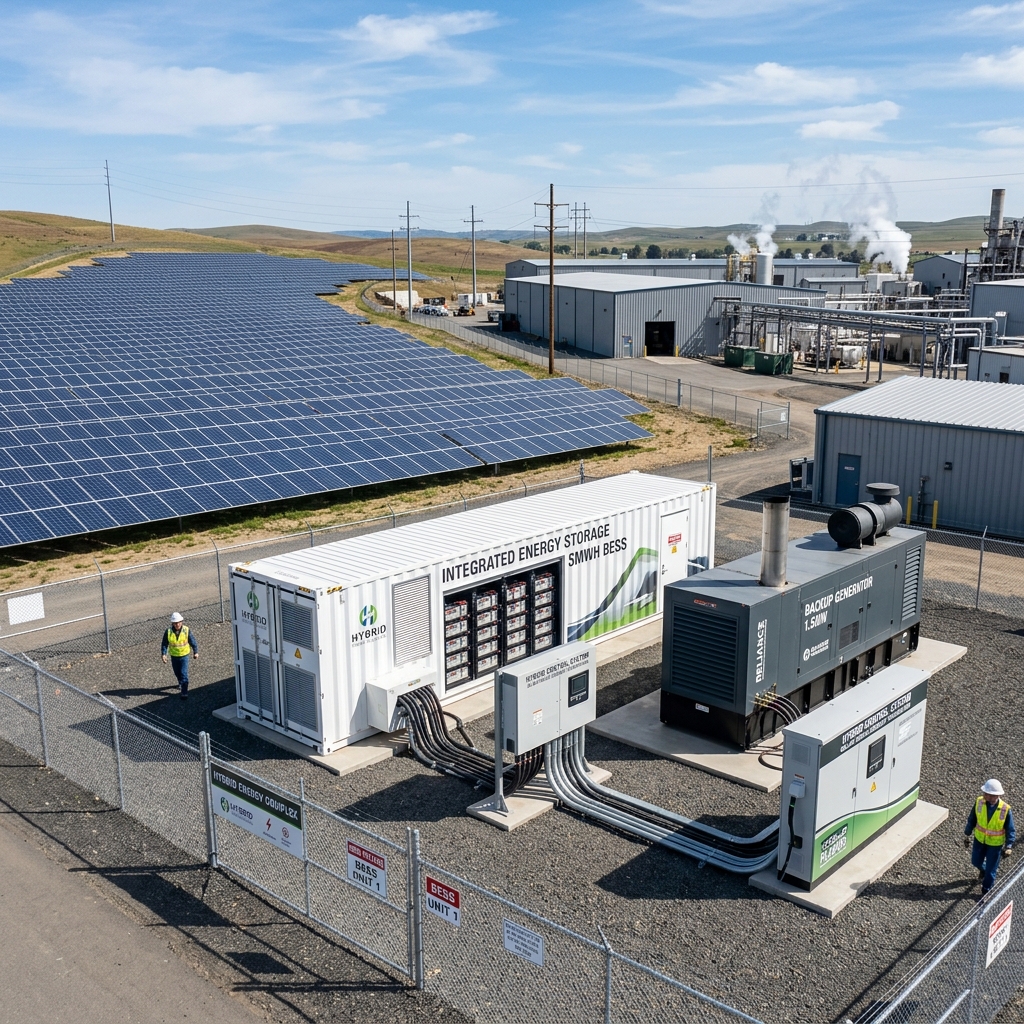
If your generator is truly �standby� (rare outages, short runtime, low testing), diesel can remain a cost-effective backup power solution.
If you face frequent outages, high demand charges, peak tariff pressure, or power-quality sensitivity, BESS typically wins on 10-year lifecycle economics because it earns value daily through peak shaving, demand charge reduction, and energy arbitrage.
The highest-ROI path for many industrial sites is not �either/or,� but hybrid energy systems:
BESS handles fast response + daily optimization
DG becomes the extended-duration safety net
BESS handles fast response + daily optimization
DG becomes the extended-duration safety net
Innocepts Solar delivers this as a full-stack model: site study - financial model - engineering - commissioning - performance monitoring. For a bankable, tariff-aware business case, book a structured assessment via energy consultation. Innocepts Solar will share a board-ready ROI + payback memo with configuration options and risk controls.
For benchmarking storage system cost categories (hardware vs EPC vs soft costs), DOE�s cost/performance assessment is a useful reference point when validating vendor quotes.
Diesel is usually cheaper upfront, but total cost depends on runtime and fuel prices. If diesel runs frequently, fuel and maintenance can dominate the lifecycle cost comparison. BESS often becomes cheaper over time when it captures daily bill savings.
Payback commonly improves when you stack savings: demand charge reduction + peak shaving + avoided diesel runtime. Sites with high peaks and tariff penalties see faster payback than flat-load sites. A modeled business case is essential before procurement.
Sometimes, but not always. If you need multi-day backup, a standalone BESS may be expensive unless paired with renewables or load shedding. Many facilities keep DG as extended-duration support.
It directly raises the delivered ?/kWh cost from diesel. Even small fuel increases can materially reduce ROI when runtime is high. This is why diesel-only strategies become unpredictable.
Peak shaving design depends on your peak duration, not just peak magnitude. Many commercial sites need 1�2 hours of discharge for tariff peaks, while resilience goals can push 2�4+ hours. The correct duration comes from interval data.
Yes�if your tariff includes a demand component and your peaks are controllable. A BESS can shave the highest 15�60 minutes (or longer) depending on the tariff rule. Controls strategy matters as much as battery size.
BESS maintenance is typically lighter: HVAC checks, firmware updates, diagnostics, and safety inspections. DGs require consumables, mechanical servicing, and periodic overhaul planning. Both need professional monitoring to ensure readiness.
Yes�hybrid energy systems (DG + BESS + solar where feasible) are widely used to improve grid resilience and reduce diesel runtime. The battery provides fast response and daily economic value. The DG covers long-duration outages with lower total runtime.
Compliance pressure can restrict non-emergency runtime or trigger reporting requirements. Customer ESG audits may also penalize diesel-heavy operations. Reducing DG runtime with storage improves the sustainability profile.
Yes, if designed for surge/starting currents and coordinated with PCS sizing. For very high inrush loads, a hybrid configuration can be engineered to handle starts smoothly. Power quality often improves versus diesel-only response.
Key risks include poor duty-cycle assumptions, inadequate thermal/fire design, and weak EMS controls that fail to monetize peaks. Vendor bankability and warranty terms are critical. This is why Innocepts Solar focuses on performance-linked design and monitoring.
If outages are rare and you only need standby, DG may be sufficient. If you have high peaks, demand penalties, and frequent disturbances, BESS often delivers higher ROI. For many businesses, the best answer is a hybrid�see hybrid energy systems.