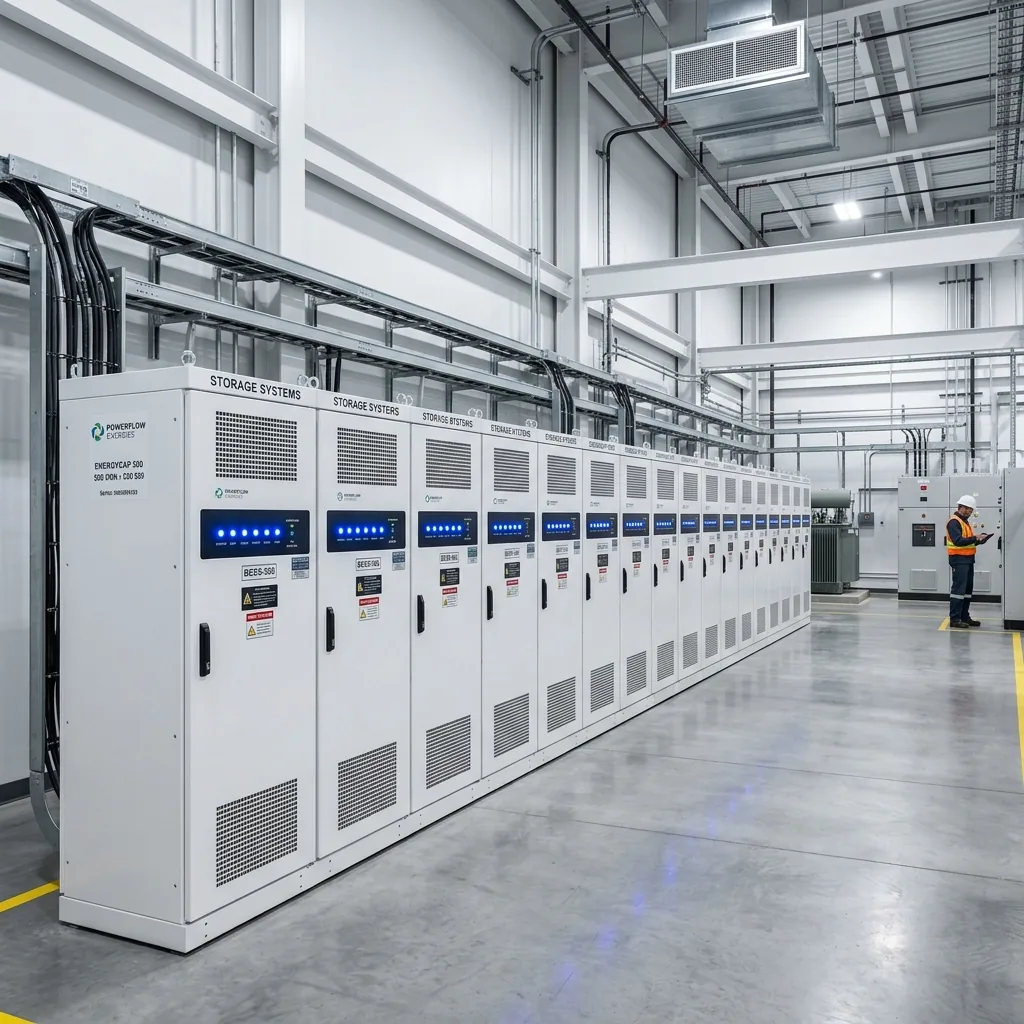
Rising diesel prices, increasing grid instability, and constant ROI pressure are forcing industrial decision-makers to re-evaluate backup power solutions. A diesel generator (DG) still looks "cheap" on paper — but the total cost of ownership tells a dramatically different story.
This comprehensive analysis compares the long-term economics, environmental impact, and operational benefits of Battery Energy Storage Systems (BESS) versus traditional diesel generators for industrial and commercial (C&I) applications in India.
Why This Comparison Matters Now
India's industrial sector faces a perfect storm of energy challenges:
- Diesel prices have risen 40%+ over the past 5 years, with no signs of reversal
- Grid instability causes 50–200+ hours of unplanned outages per year in many industrial areas
- Carbon regulations are tightening — ESG reporting is becoming mandatory for large corporates
- Battery costs have fallen 89% since 2010, making BESS economically viable at C&I scale
The question is no longer "Can we afford BESS?" — it's "Can we afford NOT to switch?"
Upfront Cost Comparison: DG vs BESS
Let's compare a typical 500 kVA system for an industrial facility:
| Parameter | Diesel Generator (500 kVA) | BESS (500 kW / 1 MWh) |
|---|---|---|
| Capital Cost (CAPEX) | ₹25–35 Lakhs | ₹1.2–1.8 Crore |
| Installation Cost | ₹2–5 Lakhs | ₹8–15 Lakhs |
| Civil Works | ₹3–5 Lakhs (DG room, exhaust, fuel tank) | ₹2–4 Lakhs (indoor/container) |
| Total Upfront | ₹30–45 Lakhs | ₹1.3–2.0 Crore |
At first glance, the DG wins on upfront cost — it's 3–5x cheaper. But this is where most decision-makers stop analyzing. The real story unfolds over the next 10–15 years.
Total Cost of Ownership (TCO): 10-Year Analysis
The true economics emerge only when you account for fuel, maintenance, downtime, and operational costs over the equipment's lifetime.
Diesel Generator — 10-Year TCO
| Cost Component | Annual Cost (₹) | 10-Year Total (₹) |
|---|---|---|
| Fuel (4 hrs/day avg @ ₹90/L) | ₹52–65 Lakhs | ₹5.2–6.5 Crore |
| Maintenance & Overhauls | ₹3–5 Lakhs | ₹30–50 Lakhs |
| Oil, Filters, Coolant | ₹1–2 Lakhs | ₹10–20 Lakhs |
| Operator Salary | ₹3–4 Lakhs | ₹30–40 Lakhs |
| Capital Cost (Amortized) | — | ₹30–45 Lakhs |
| Total 10-Year TCO | ₹6.3–8.0 Crore |
BESS — 10-Year TCO
| Cost Component | Annual Cost (₹) | 10-Year Total (₹) |
|---|---|---|
| Electricity (Charging from Grid/Solar) | ₹12–18 Lakhs | ₹1.2–1.8 Crore |
| Maintenance (BMS, Cooling, Inspections) | ₹1–2 Lakhs | ₹10–20 Lakhs |
| Capital Cost (Amortized) | — | ₹1.3–2.0 Crore |
| No Fuel Cost | ₹0 | ₹0 |
| No Operator Required | ₹0 | ₹0 |
| Total 10-Year TCO | ₹2.5–3.8 Crore |
Result: Over 10 years, BESS saves ₹3–5 Crore compared to a diesel generator — a 40–60% reduction in total energy backup costs.
ROI & Payback Period
Despite the higher upfront cost, BESS achieves financial payback through:
- Eliminated fuel costs — the single largest DG expense
- Peak shaving — reducing maximum demand charges by 15–30%
- Arbitrage — charging during off-peak hours, discharging during peak tariff periods
- Grid services — frequency regulation and reactive power compensation (future revenue)
Typical Payback Scenarios
| Usage Pattern | DG Running Hours | BESS Payback Period |
|---|---|---|
| Heavy outage areas | 6–8 hrs/day | 2.5–3 years |
| Moderate outage areas | 3–5 hrs/day | 4–5 years |
| Low outage + peak shaving | 1–3 hrs/day | 5–7 years |
With BESS lifespans of 15–20 years (LiFePO₄ chemistry), the system continues delivering free backup power for 8–15 years after payback.
Operational Advantages: BESS vs DG
| Feature | Diesel Generator | BESS |
|---|---|---|
| Switchover Time | 10–30 seconds (with ATS) | < 20 milliseconds (seamless) |
| Noise Level | 75–100 dB (disruptive) | < 50 dB (silent operation) |
| Emissions | CO₂, NOx, PM2.5, SOx | Zero emissions |
| Scalability | Requires new unit | Modular — add battery racks |
| Remote Monitoring | Limited | Full IoT + Cloud BMS |
| Fire Risk | Fuel storage hazard | Advanced thermal management |
| Space Required | Large (DG room + fuel tank + exhaust) | Compact (indoor or container) |
| Lifespan | 8,000–15,000 hours | 6,000+ cycles (15–20 years) |
Environmental Impact
A single 500 kVA diesel generator running 4 hours/day produces approximately:
- 150–200 tonnes of CO₂ per year
- Significant NOx and particulate matter emissions
- Fuel spill risk and soil contamination
- Noise pollution affecting worker productivity
Switching to BESS (especially when paired with solar) eliminates these emissions entirely, supporting your organization's ESG goals and upcoming BRSR (Business Responsibility and Sustainability Reporting) requirements.
When Does a DG Still Make Sense?
To be fair, diesel generators still have valid use cases:
- Extended outages (12+ hours) where battery capacity isn't sufficient
- Remote/off-grid sites with no reliable power source for charging
- Temporary construction sites where portability matters
- Critical standby for hospitals, data centers (often used alongside BESS)
However, for most industrial and commercial applications with 2–8 hours of daily backup needs, BESS is the superior long-term investment.
BESS + Solar: The Ultimate Combination
When BESS is paired with a rooftop or open-access solar system, the economics become even more compelling:
- ₹0 charging cost — solar charges the battery for free during the day
- True energy independence — reduced grid dependency
- Carbon neutrality — zero fossil fuel in the entire energy chain
- Accelerated payback — typically 2–3 years with solar integration
Innocepts Solar BESS Solutions
Innocepts Solar offers a range of BESS products designed for Indian industrial conditions:
- GENSTOR 261KWH — Ideal for small-to-medium C&I facilities
- GENSTOR 1000KWH — Large C&I and multi-building campuses
- MEGA GENSTOR 5MWH — Utility-scale storage for grid-connected projects
All systems feature LiFePO₄ chemistry, intelligent Battery Management Systems (BMS), active thermal management, and cloud-based monitoring.
With 24+ MWh of BESS commissioned, 65+ projects completed, and 7+ years of experience, Innocepts Solar is your trusted partner for transitioning from diesel to clean, reliable energy storage.
Conclusion
The DG-to-BESS transition is not a question of "if" — it's a question of "when." The numbers are clear:
- 40–60% lower TCO over 10 years
- Zero fuel costs and minimal maintenance
- Seamless switchover in under 20 milliseconds
- Zero emissions — ESG-ready from day one
- 15–20 year lifespan with no major overhauls
Stop spending ₹50+ Lakhs/year on diesel. Start investing in energy storage that pays for itself.
Ready to switch from Diesel to BESS?
📞 Call 08448295009 or 09991108888 for a free BESS consultation and site assessment.
📧 Email: info@innoceptssolar.com
🌐 Visit: Explore BESS Products