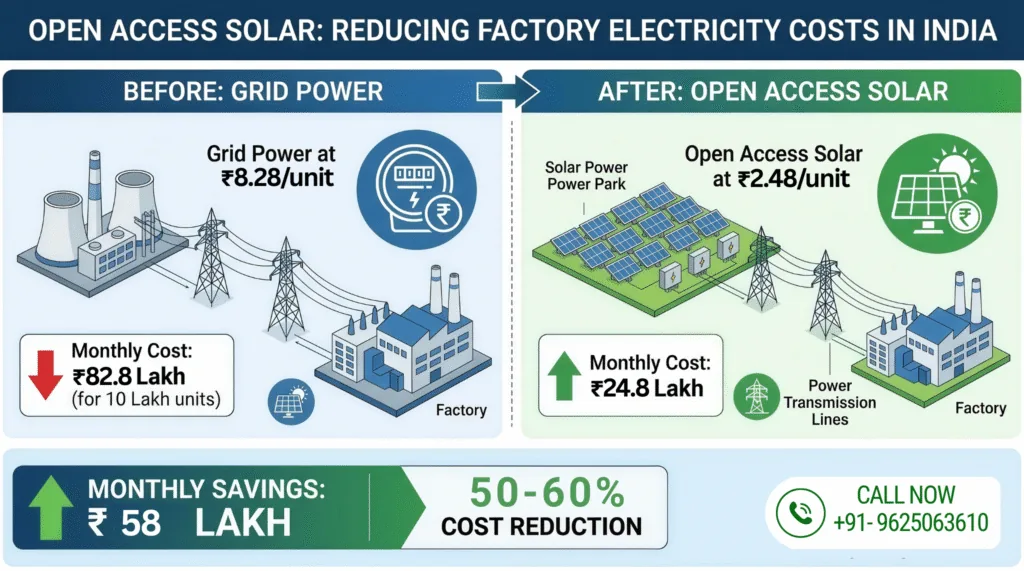
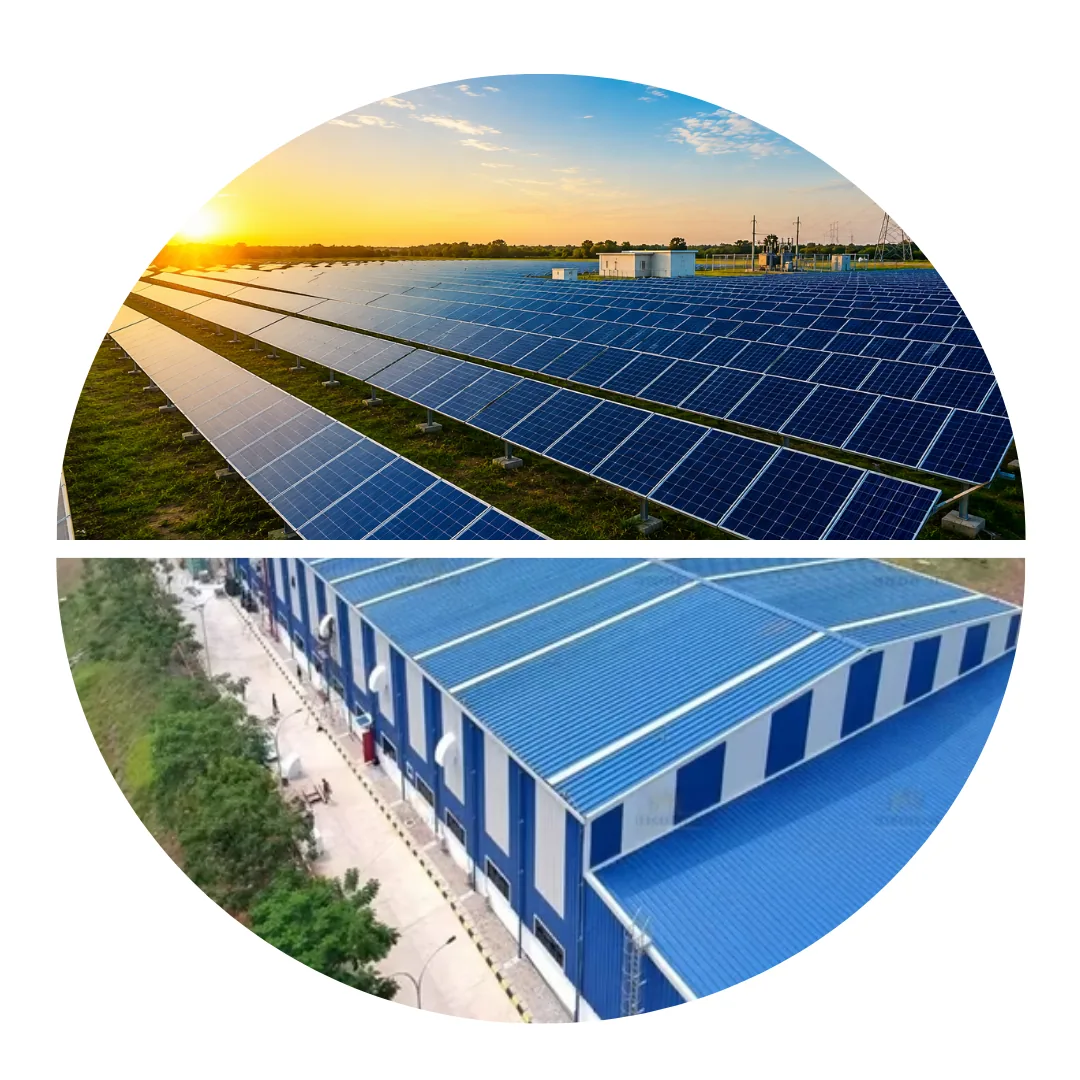
In reality, most projects don’t succeed or fail on the headline tariff alone. They succeed on how well the Open Access Solar process in India is executed—how cleanly and predictably you move through feasibility, regulatory approvals, metering readiness, commissioning, and the first few billing cycles.
This practical guide is designed for Indian industrial and manufacturing facilities (especially in states like Haryana, Uttar Pradesh, Maharashtra, and Punjab) that want bankable savings, operational certainty, and minimal execution risk.
We will walk you through:
• The complete end-to-end Open Access Solar journey — from site feasibility and energy profiling to GOAR registration, SLDC coordination, metering architecture, and commercial operations.
• What typically goes wrong at each stage — documentation gaps, DISCOM dependencies, metering mismatches, grid synchronization delays, and first-bill reconciliation errors.
• How to de-risk your project using structured checklists, technical proof artifacts, and execution readiness benchmarks.
• What a serious EPC and project partner like Innocepts Solar should demonstrate — real approvals, tested metering layouts, SLDC interface experience, commissioning playbooks, and post-COD billing validation.
Because in Open Access Solar, success is not about chasing the lowest ?/kWh headline number.
It is about building a process-driven, approval-ready, and grid-compliant project that delivers stable landed power cost year after year.
Open Access Solar means your factory procures renewable electricity from an off-site solar plant (not your rooftop) and receives it through the grid under open access mechanisms. That’s why many teams call it Industrial Open Access Solar—because the process is closer to grid procurement than a normal onsite solar project.
Common structures are:
Captive: you own the plant for your own consumption
Group captive: multiple consumers co-own and consume as per captive rules
Third-party PPA: you buy energy from a developer; you don’t own the plant
Captive: you own the plant for your own consumption
Group captive: multiple consumers co-own and consume as per captive rules
Third-party PPA: you buy energy from a developer; you don’t own the plant
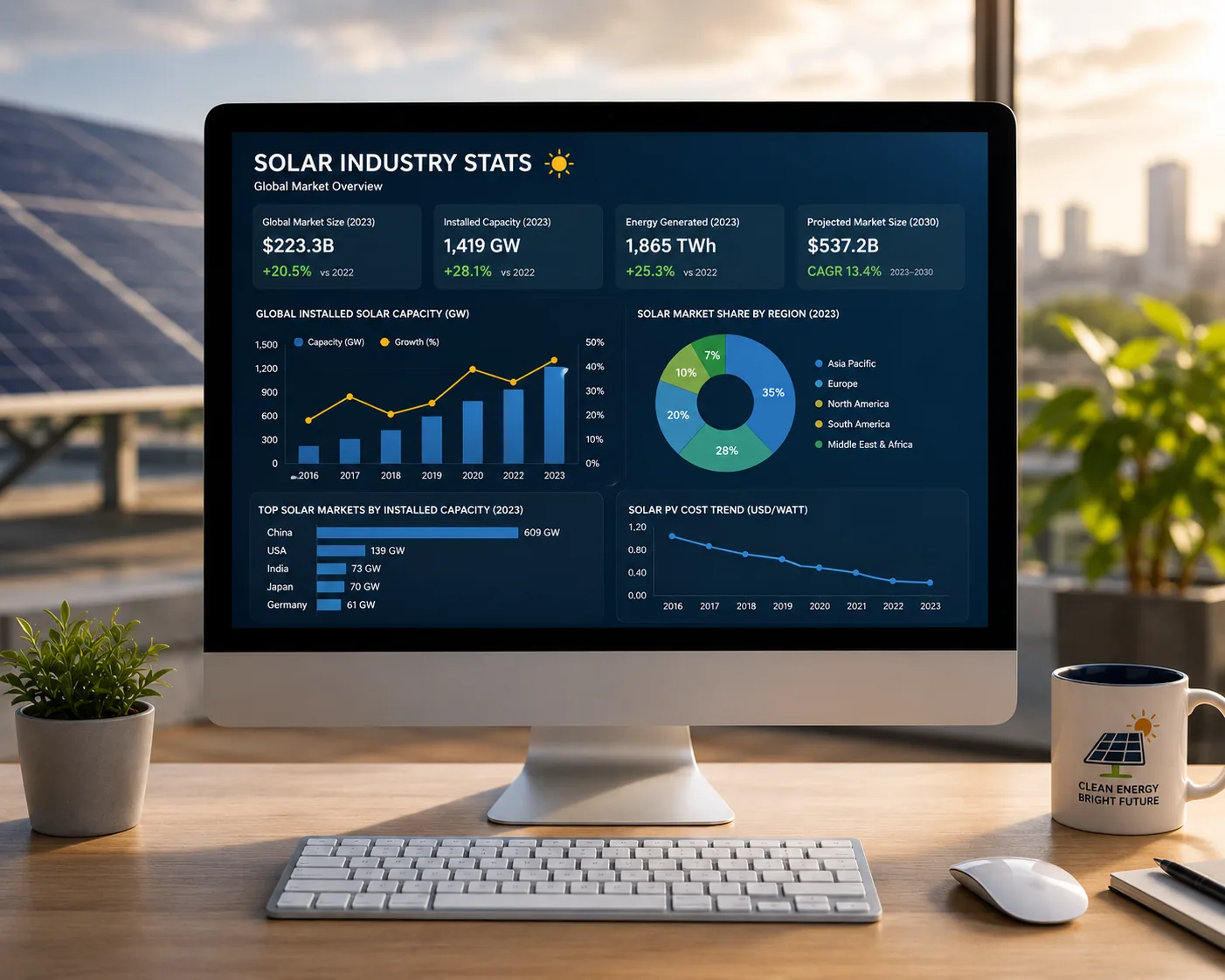
A major reform in India’s open access solar framework is the introduction of the GOAR (Green Open Access Registry) portal, designed to function as a centralized digital registry and a single-window workflow for open access applications, approvals, and tracking.
On paper, GOAR promises faster turnaround — with a benchmark approval timeline of 15 days. In practice, however, many industrial consumers and developers quickly realize that “15 days” can easily stretch into 45–60 days if the project ecosystem is not fully prepared for real-world execution dependencies.
The portal itself is not the bottleneck.
The real challenges typically arise from process readiness across multiple stakeholders and technical layers, including:
1. Documentation Accuracy & Regulatory Compliance
GOAR requires precise and complete documentation at the time of submission. Even minor gaps can trigger rejections or clarification cycles, such as:
Incomplete OA agreements
Incorrect banking or wheeling structures
Inaccurate load profiles
Mismatch between plant capacity and contracted capacity
Improper captive or group captive shareholding declarations
Incomplete OA agreements
Incorrect banking or wheeling structures
Inaccurate load profiles
Mismatch between plant capacity and contracted capacity
Improper captive or group captive shareholding declarations
A single discrepancy can reset the entire approval clock.
2. Metering Architecture & Interface Readiness
Open access approval is not only a regulatory process — it is a grid-level engineering process.
SLDCs require:
ABT / SEM compliant meters
Correct metering locations (plant end, pooling substation, consumer end)
Proper telemetry and data communication setup
Synchronization with SLDC scheduling systems
ABT / SEM compliant meters
Correct metering locations (plant end, pooling substation, consumer end)
Proper telemetry and data communication setup
Synchronization with SLDC scheduling systems
If your metering design is not approved in advance, GOAR approval alone will not allow energy flow.
Practical Takeaway
The GOAR portal is a process accelerator — not a timeline guarantee.
It simplifies the application workflow, but it cannot compensate for incomplete engineering, regulatory gaps, or poor coordination.
A fast approval is only possible when:
Documentation is audit-ready
Metering design is pre-approved
Grid connectivity is locked
SLDC & DISCOM workflows are aligned
Site readiness is achieved before submission
Documentation is audit-ready
Metering design is pre-approved
Grid connectivity is locked
SLDC & DISCOM workflows are aligned
Site readiness is achieved before submission

How Innocepts Makes GOAR Actually Work
At Innocepts Solar, we treat GOAR not as a formality, but as the final layer of a fully engineered execution stack. Our open access solar process is built backwards from commissioning — ensuring that by the time an application hits GOAR.
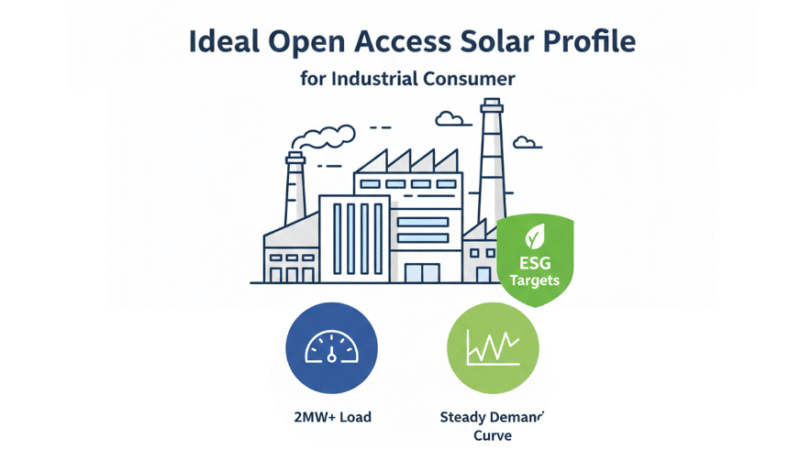
Ideal profiles (2 MW+ loads, multi-unit groups, ESG targets)
Industrial Open Access Solar is typically considered when you have:
large and steady consumption (often 2 MW+ HT consumers)
multiple units or connections where aggregation/structure matters
ESG or renewable targets requiring verifiable procurement
leadership alignment that values “savings + compliance + execution certainty”
large and steady consumption (often 2 MW+ HT consumers)
multiple units or connections where aggregation/structure matters
ESG or renewable targets requiring verifiable procurement
leadership alignment that values “savings + compliance + execution certainty”
This matters because the open access solar process India is not just buying solar energy—it’s managing approvals, metering, settlement, and billing discipline.
Your open access procurement model is not just a commercial choice — it directly impacts your regulatory compliance obligations, how project and grid risks are allocated, and how stable and predictable your long-term landed power cost will actually feel.
Each model creates a different ownership structure, financial exposure, and operational responsibility. Choosing the right one ensures your solar transition is a strategic advantage, not an administrative burden.
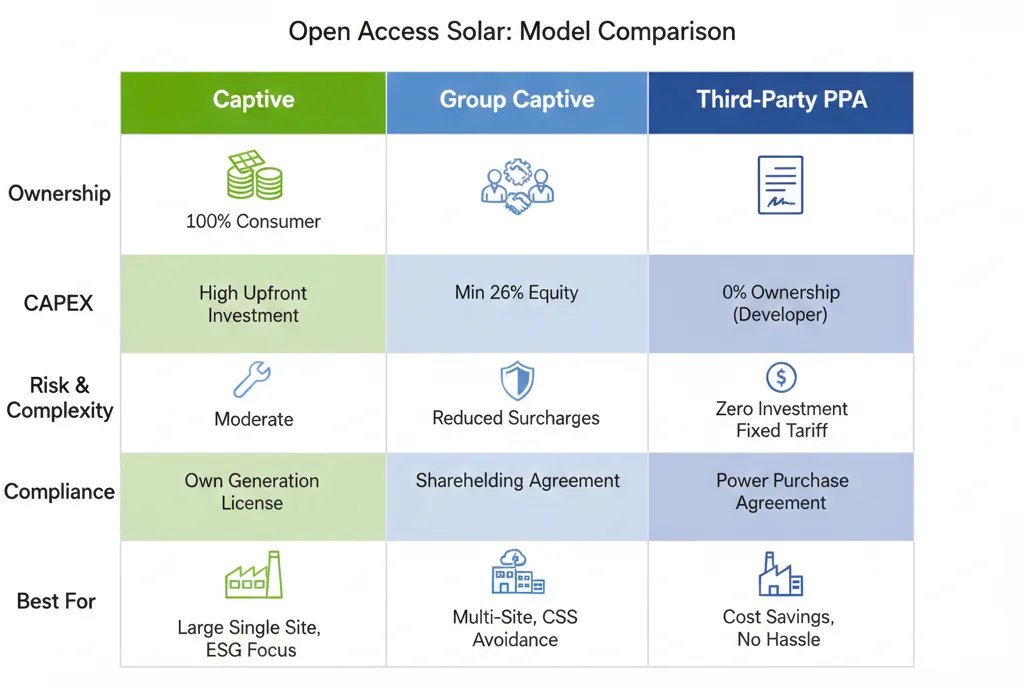
Choose Captive if you want full ownership and control of the asset, are comfortable investing upfront capital, and want maximum long-term cost certainty with captive regulatory benefits.
Choose Group Captive if you want to share ownership with other consumers, reduce your capital commitment, and still enjoy captive compliance exemptions such as lower surcharges and banking benefits.
Choose Third-party PPA if you prefer an energy-purchase model with minimal upfront investment, want to keep solar off your balance sheet, and value predictable monthly power bills with operational risk handled by the developer.
At Innocepts Solar, we help you evaluate, structure, and execute the right model for your business—so your open access transition is compliant, bankable, and built for long-term cost stability.
This is the real open access solar process India. The success pattern is consistent: projects that treat approvals + metering + dossier + reconciliation as critical path stay stable; projects that treat them as “paperwork” lose time and savings credibility.

What to do
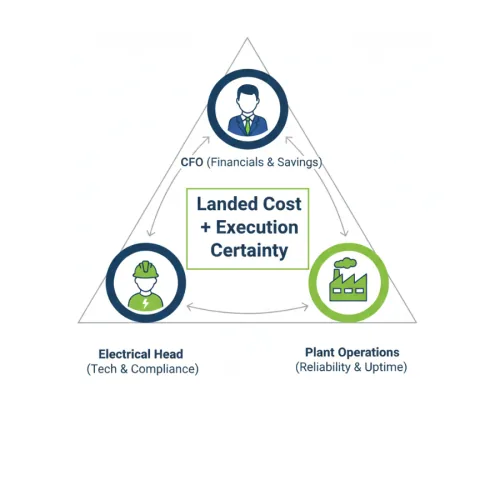
Align CFO + Electrical + Plant Head on one metric: landed cost, not headline tariff
Define success: saving target, renewable % target, risk appetite
Decide your posture: stable landed cost vs maximum savings with more variability
Align CFO + Electrical + Plant Head on one metric: landed cost, not headline tariff
Define success: saving target, renewable % target, risk appetite
Decide your posture: stable landed cost vs maximum savings with more variability
What can go wrong
CFO expects fixed ?/kWh savings; Electrical knows charges and settlement can move it
Plant worries about shutdown risk and safety
Board trust drops if the story changes after approvals begin
CFO expects fixed ?/kWh savings; Electrical knows charges and settlement can move it
Plant worries about shutdown risk and safety
Board trust drops if the story changes after approvals begin
How Innocepts Solar should help
An EPC like Innocepts Solar should provide a one-page risk register and a responsibility matrix so all stakeholders know what they’re agreeing to.
What to do
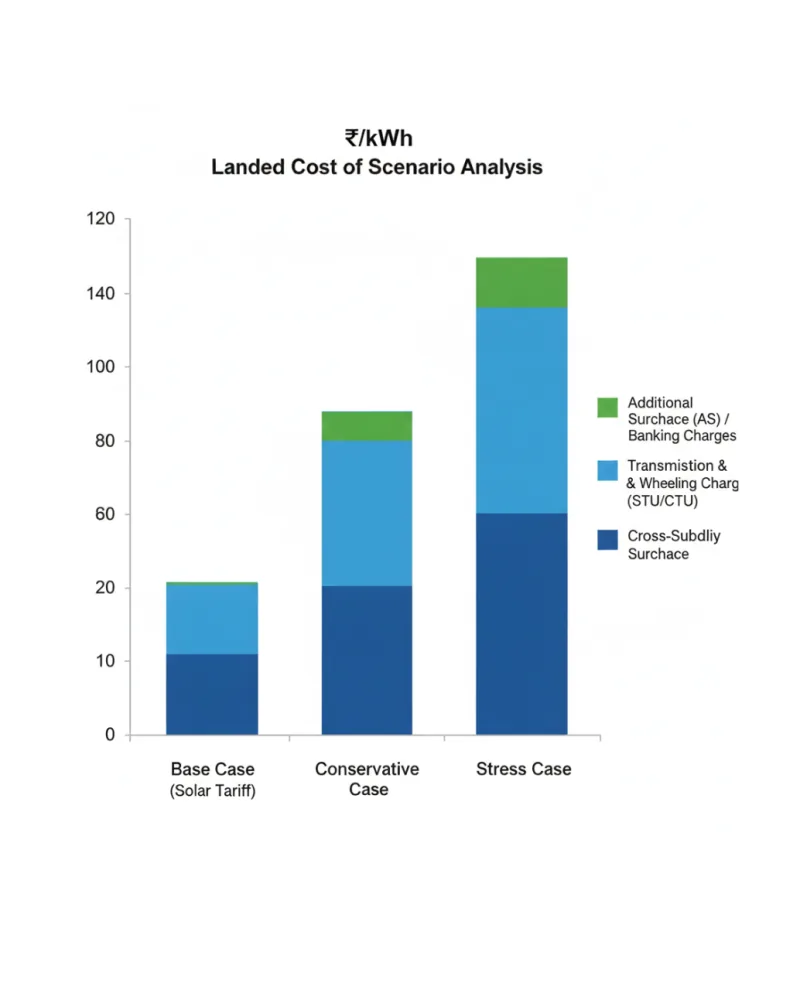
Collect 12 months bills and demand profile, then model the open access solar landed cost (?/kWh) including:
transmission and wheeling charges open access solar
cross subsidy surcharge green open access (where applicable)
banking charge green open access and banking settlement limits
standby charges open access (where applicable)
other system operation charges, scheduling/LDC fees, and ToD/DSM impacts (as applicable)
transmission and wheeling charges open access solar
cross subsidy surcharge green open access (where applicable)
banking charge green open access and banking settlement limits
standby charges open access (where applicable)
other system operation charges, scheduling/LDC fees, and ToD/DSM impacts (as applicable)
What can go wrong
Tariff is sold as landed cost
“Policy volatility” fear isn’t addressed (state orders can change)
Curtailment/outage/demand variation isn’t priced
Tariff is sold as landed cost
“Policy volatility” fear isn’t addressed (state orders can change)
Curtailment/outage/demand variation isn’t priced
How to de-risk
Build a 3-scenario model:
Base case: current published orders
Conservative case: less banking benefit + higher charges
Operational stress: curtailment + demand variation + ToD/DSM impact
Base case: current published orders
Conservative case: less banking benefit + higher charges
Operational stress: curtailment + demand variation + ToD/DSM impact
What to demand from Innocepts Solar
A transparent sheet with assumptions + a one-page “board slide” summary.
What to do
Apply via GOAR portal green open access
Coordinate stakeholder approvals, especially SLDC approval open access solar
Keep your submission pack version-controlled and utility-ready
Apply via GOAR portal green open access
Coordinate stakeholder approvals, especially SLDC approval open access solar
Keep your submission pack version-controlled and utility-ready
What can go wrong
Portal status - coordination closure (handoffs stall)
Repeated revisions of drawings/protection schemes
Bay/evacuation/interface constraints discovered late
Compliance dossier gaps and inspection dependencies
Portal status - coordination closure (handoffs stall)
Repeated revisions of drawings/protection schemes
Bay/evacuation/interface constraints discovered late
Compliance dossier gaps and inspection dependencies
How to de-risk
Run approvals with a single tracker (owner/date/dependency/pendency reason)
Pre-validate metering specs + protection philosophy + communication requirements
Use one point owner for coordination (not “everyone owns it”)
Run approvals with a single tracker (owner/date/dependency/pendency reason)
Pre-validate metering specs + protection philosophy + communication requirements
Use one point owner for coordination (not “everyone owns it”)
What to demand from Innocepts Solar
An approval tracker dashboard + document control logs.
What to do
Lock these in writing:
metering boundary (which meter defines delivered energy?)
COD / acceptance criteria and dossier requirements
pass-through vs shared vs absorbed charges (banking/CSS/standby/wheeling)
change-in-law clause
billing dispute workflow + timelines
O&M SLA + escalation + spares governance
metering boundary (which meter defines delivered energy?)
COD / acceptance criteria and dossier requirements
pass-through vs shared vs absorbed charges (banking/CSS/standby/wheeling)
change-in-law clause
billing dispute workflow + timelines
O&M SLA + escalation + spares governance
What can go wrong
Acceptance criteria unclear - COD disputes
Change-in-law weak - surprises later
Ambiguity on billing boundary - recurring reconciliation fights
Acceptance criteria unclear - COD disputes
Change-in-law weak - surprises later
Ambiguity on billing boundary - recurring reconciliation fights
What to demand from Innocepts Solar
Contract annexures: metering boundary diagram + dossier index + O&M SLA.
What to do
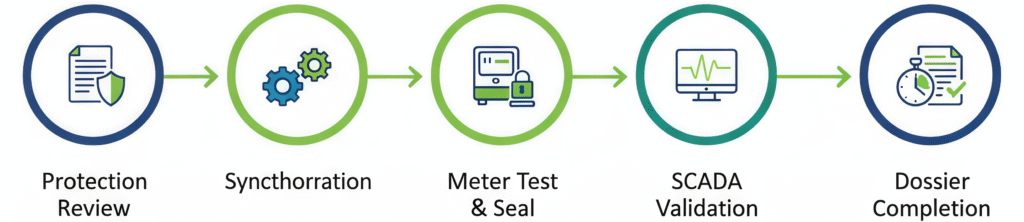
Commissioning must be gated and evidence-driven:
protection settings review and signoff
synchronization checks and trial run logs
ABT metering open access solar and SEM meter open access testing + sealing evidence
SCADA/data availability verification
complete commissioning dossier (as-builts, test reports, settings, approvals, logs)
protection settings review and signoff
synchronization checks and trial run logs
ABT metering open access solar and SEM meter open access testing + sealing evidence
SCADA/data availability verification
complete commissioning dossier (as-builts, test reports, settings, approvals, logs)
Where applicable, track statutory steps like CEIG inspection solar project dependencies (state/project dependent).
What can go wrong
tripping and rework due to settings/termination/earthing issues
meter testing/sealing delays push COD
data gaps cause settlement mismatch
tripping and rework due to settings/termination/earthing issues
meter testing/sealing delays push COD
data gaps cause settlement mismatch
What to demand from Innocepts Solar
An audit-ready dossier index from day one—completed at COD.
What to do
Even offsite solar touches your factory through HT shutdowns, metering work, and relay integration. Treat it like an outage:
method statements and LOTO plans
permit-to-work discipline
QA/QC inspection hold points
method statements and LOTO plans
permit-to-work discipline
QA/QC inspection hold points
What can go wrong
missed shutdown window
safety risks on factory premises
rushed work and inconsistent QC
missed shutdown window
safety risks on factory premises
rushed work and inconsistent QC
What to demand from Innocepts Solar
A site HSE plan + QA/QC pack + photographic evidence and permits.
What to do
Savings stability comes from monthly discipline:
compare generation vs delivered vs billed
reconcile ABT/SEM meter data with SLDC statements
verify banking adjustments and DISCOM charge components
run a 90-day stabilization cadence
compare generation vs delivered vs billed
reconcile ABT/SEM meter data with SLDC statements
verify banking adjustments and DISCOM charge components
run a 90-day stabilization cadence
This is energy accounting reconciliation open access—and it prevents “infinite billing disputes.”
What to demand from Innocepts Solar
Monthly reconciliation packs aligned to billing boundary + SLDC statements, plus O&M SLA governance.
GOAR + SLDC/DISCOM handoffs stall
Disclaimer: timelines and - impact vary by state orders, SLDC/DISCOM procedure, and project specifics.
Money/savings anxiety
This is the most common reason CFO confidence drops. The project is sold on a headline tariff, but the real number depends on the full stack: wheeling charges open access solar, cross subsidy surcharge green open access, banking charge green open access, standby charges open access, and profile impacts like ToD/DSM (where applicable).
Approvals & coordination delays
GOAR provides visibility, but coordination still matters. Approvals can stall due to documentation loops, interface dependencies, and delays in SLDC approval open access solar coordination with DISCOM/STU requirements.
Metering/energy accounting mismatch
Billing follows regulated metering and settlement statements. If your billing boundary and data discipline aren’t aligned, energy accounting reconciliation open access becomes a long-running fight.
Production shutdown & safety risks
Even offsite solar touches your plant. HT shutdowns, metering changes, and relay work can create production risk if outage planning is weak or safety culture is inconsistent.
Commissioning tripping & data gaps
Projects can be “physically complete” but still unstable due to protection issues, incomplete settings signoff, or data availability gaps—especially when ABT/SEM readiness isn’t treated as critical path.
Under-generation + slow O&M response
Soiling, inverter downtime, curtailment, and slow response degrade delivered energy and savings. Without an O&M SLA + spares governance, small problems become long downtime.
Pre-GOAR readiness checklist
Use this before you apply so GOAR doesn’t become a documentation loop:
confirm eligibility and connection architecture
finalize model (captive / group captive / third-party PPA)
collect 12-month bills + demand/ToD profile
freeze metering boundary diagram
map stakeholders and owners
confirm eligibility and connection architecture
finalize model (captive / group captive / third-party PPA)
collect 12-month bills + demand/ToD profile
freeze metering boundary diagram
map stakeholders and owners
Metering / SEM / ABT readiness checklist
Treat metering as a critical path:
confirm SEM meter open access specs accepted by utility/settlement framework
validate CT/PT ratios, polarity, wiring diagrams
book testing and sealing slots early
define time sync + data retrieval ownership
prepare reconciliation template before COD
confirm SEM meter open access specs accepted by utility/settlement framework
validate CT/PT ratios, polarity, wiring diagrams
book testing and sealing slots early
define time sync + data retrieval ownership
prepare reconciliation template before COD
Commissioning + dossier readiness checklist
Gated commissioning prevents billing surprises:
protection settings approved and signed
earthing/lightning verified
SCADA tags verified against billing boundary
dossier index locked and completed
protection settings approved and signed
earthing/lightning verified
SCADA tags verified against billing boundary
dossier index locked and completed
First 90-day billing reconciliation actions
This is how you stop disputes early:
Week 1: meter data vs SLDC statement
Week 2: DISCOM bill vs charge buckets
Week 3: banking settlement validation
Week 4: close gaps with evidence log
Week 1: meter data vs SLDC statement
Week 2: DISCOM bill vs charge buckets
Week 3: banking settlement validation
Week 4: close gaps with evidence log
Approval tracker + owner’s engineering pack
A strong EPC runs approvals like a PMO and delivers submission-ready engineering packs: SLDs, protection philosophy, metering architecture, interface drawings.
Metering + commissioning dossier discipline
A good EPC treats dossier creation as a product: every test, seal, setting, and log is captured and version-controlled. That’s how ABT/SEM disputes get prevented.
Data/SCADA discipline for dispute-free billing
Dashboards should mirror the billing boundary and settlement logic. If your SCADA view is “PR data” but billing is “meter/settlement data,” reconciliation becomes conflict.
O&M SLA + spares + response governance
Industrial Open Access Solar needs response governance. Delivered energy is everything—slow response equals savings loss.
Documents/data to collect early (checklist)
Commercial data
Collect early to avoid rework:
12 months electricity bills (energy + demand + ToD)
contracted demand / sanctioned load details
OA history/penalties (if any)
12 months electricity bills (energy + demand + ToD)
contracted demand / sanctioned load details
OA history/penalties (if any)
Electrical data
latest SLD
HT panel, CT/PT details, relay make/model
meter details (make/class/comms)
shutdown windows and constraints
latest SLD
HT panel, CT/PT details, relay make/model
meter details (make/class/comms)
shutdown windows and constraints
Compliance + approvals data
facility address/connection IDs (for mapping/aggregation where applicable)
stakeholder contact map (SLDC/DISCOM/STU)
inspection reports/statutory dependencies (where applicable)
facility address/connection IDs (for mapping/aggregation where applicable)
stakeholder contact map (SLDC/DISCOM/STU)
inspection reports/statutory dependencies (where applicable)
If you want a faster, lower-risk start, Innocepts Solar offers a structured “Approval & Metering Readiness Checklist” walkthrough tailored specifically to your state regulations, DISCOM requirements, and connection architecture. This ensures your documentation, metering design, SLDC coordination, and site readiness are aligned from day one—helping you avoid rework, approval delays, and costly execution gaps while accelerating your Open Access solar commissioning timeline.
It is the end-to-end workflow to procure off-site solar through the grid—feasibility (landed cost), GOAR application, SLDC/DISCOM coordination, ABT/SEM metering readiness, commissioning, and monthly reconciliation.
The GOAR portal green open access is the centralized registry/workflow used to submit and track green energy open access applications and status updates.
Rules and procedures aim to reduce timelines, but actual approvals depend on state processes, submission completeness, and stakeholder coordination (GOAR, SLDC, DISCOM, STU).
Include base tariff plus transmission, wheeling charges open access solar, cross subsidy surcharge green open access (where applicable), banking charge green open access, standby charges open access (where applicable), and other system operation charges and ToD/DSM impacts as applicable.
Because settlement depends on regulated metering and SLDC statements. Time sync, interval data completeness, and the billing boundary must be correct.
Approvals handoffs, metering testing/sealing slots, repeated drawing revisions, protection commissioning issues, data gaps, and incomplete commissioning dossiers (plus CEIG steps where applicable).
Run a 90-day reconciliation SOP and require evidence-based monthly reconciliation packs aligned to billing boundary + SLDC statements.
Ask for sample approvals tracker, metering BOM/spec + test plan, commissioning dossier index, reconciliation pack, and O&M SLA with escalation and spares governance.
It can, mainly due to HT shutdowns for metering/protection work. Outage-style planning prevents production disruption.
Always verify the latest state orders and SLDC/DISCOM procedures for your target states (e.g., Haryana, Uttar Pradesh, Maharashtra, Punjab) before finalizing the model and signing contracts.