Why Solar Plants Underperform: 12 Design & Engineering Mistakes EPCs Must Prevent
Solar plant underperformance is the gap between expected energy (modeled) and actual energy (delivered)—usually visible as PR drop, repeated trips, hotspots, mismatch losses, avoidable derating, and high downtime. In simple terms, solar plant underperformance happens when engineering decisions allow controllable losses to grow silently.
A widely referenced way to communicate PV performance is the Performance Ratio (PR)—which converts complex losses into one comparable metric. NREL’s PR guidance explains PR as a practical indicator of how a plant converts available sunlight into usable electricity after losses.
This blog breaks down the 12 most common solar EPC design mistakes that cause solar plant underperformance in India—and the prevention strategies EPCs must design in from day one. The goal is technical clarity, not sales. Still, you’ll see how Innocepts Solar approaches EPC engineering with performance accountability.
In India, solar plant underperformance is rarely caused by one big failure. It’s usually many small design shortcuts: layout shading, MPPT zoning mistakes, wrong DC/AC ratio, cable losses, poor ventilation, weak protection coordination, and inadequate monitoring.
Two realities make this worse:
- PR and monitoring need consistent definitions and architecture. IEC 61724-1 outlines terminology, monitoring classes, and methods for PV performance monitoring and analysis—critical for diagnosing PR drop properly.
- Grid behavior and integration constraints are increasingly important. IEA’s solar PV overview highlights rapid PV growth and system-level implications, which in practice means more emphasis on grid interface and stability.
For PM-KUSUM, engineering discipline becomes even more important because scheme-linked execution and grid interface are tightly tied to export quality and availability”MNRE’s PM-KUSUM resources are the baseline reference for compliance context.
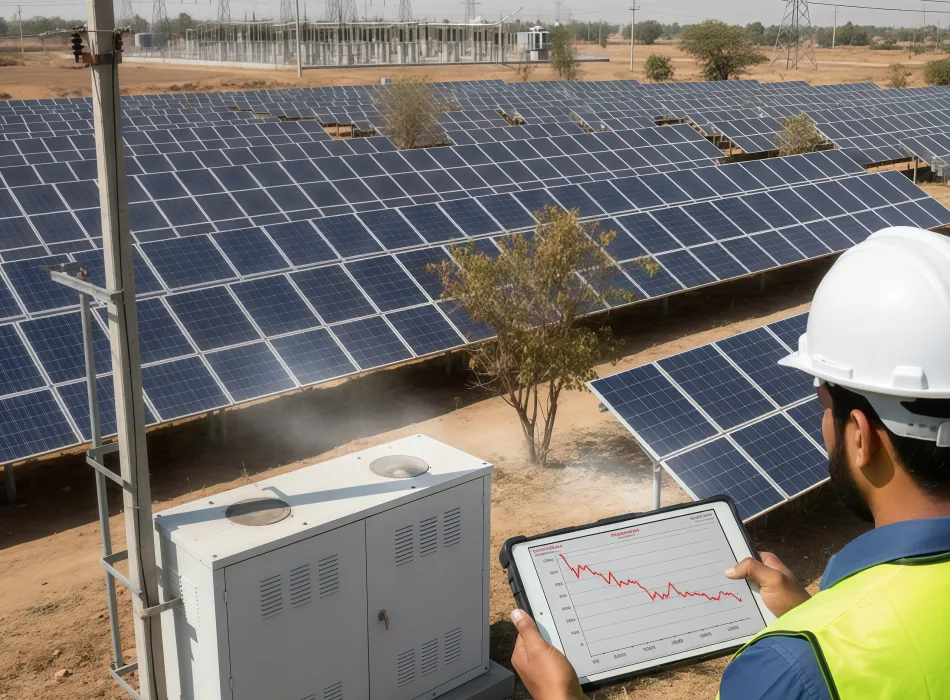
1) Weak Site Assessment (terrain, shading, soil, microclimate)
Impact: Avoidable shading, waterlogging, unstable foundations underperformance via downtime and layout compromise.
Engineering fix: horizon shading + geotech + drainage-first planning.
2) Layout Not Optimized for Both Energy + O&M
Impact: self-shading, unsafe access, cleaning difficulty - PR drop and higher downtime.
Engineering fix: pitch optimization + O&M corridors + constructability review.
3) DC/AC Ratio Chosen by Rule-of-Thumb
Impact: clipping losses or underutilized inverters - consistent energy loss.
Engineering fix: simulate DC/AC based on local irradiance/temperature and export constraints using accepted PV performance modeling principles (SAM references the structured PV output modeling approach).
4) MPPT/String Design Errors (mismatch zoning ignored)
Impact: mismatch losses, hot strings, lower energy yield - solar plant underperformance accelerates.
Engineering fix: MPPT zoning by orientation/shading; strict string uniformity. Sandia’s PV Performance Modeling Collaborative details mismatch loss modeling concepts and how heterogeneous irradiance drives mismatch.
5) Cable Sizing & Routing Done Late
Impact: higher I—R losses, cable heating, nuisance faults.
Engineering fix: voltage-drop budgets + thermal derating + disciplined routing.
6) Earthing & Lightning Protection Treated as a Generic BOQ
Impact: inverter trips, SPD failures, component damage, safety risk.
Engineering fix: site-specific earthing grid + SPD coordination + testing plan.
7) Inverter Placement & Ventilation Ignored (Thermal Derating)
Impact: avoidable derating, reduced uptime, faster failures - solar plant underperformance.
Engineering fix: heat-load + airflow design, avoid direct solar gain, dust strategy.
8) Soiling Strategy Not Engineered
Impact: seasonal PR drag becomes “normal.”
Engineering fix: soiling-rate assumptions + cleaning method engineering + monitoring alignment (IEC monitoring architecture helps make soiling measurable).
9) Module Reliability Risks Not Mapped (microcracks, PID, hotspots)
Impact: hotspots, faster degradation, repeated replacements.
Engineering fix: BOM discipline + acceptance tests + thermography/EL checks. PVEL’s reliability scorecard ecosystem and executive summaries show how BOM changes and stress pathways matter.
10) Loss Modeling Doesn’t Match As-Built Reality
Impact: “expected vs actual” never closes - solar plant underperformance persists.
Engineering fix: transparent loss waterfall; update assumptions after design freeze and as-built verification (PR frameworks and monitoring approaches discussed in NREL PR guidance remain foundational).
11) Monitoring Design is Incomplete (no actionable KPIs)
Impact: faults hide, downtime rises, PR bleeds slowly.
Engineering fix: IEC 61724-1 aligned architecture: irradiance/temperature instrumentation, inverter/string-level telemetry where it matters, and alarm rules.
12) Grid Interface Not Engineered (settings/protection/ride-through)
Impact: tripping, voltage excursions, curtailment exposure.
Engineering fix: protection coordination + settings discipline + interconnection clarity. IEEE 1547-2018 defines criteria for interconnection/interoperability of DER with electric power systems—useful for framing grid support expectations.
pitch/access not engineered
To reduce solar plant underperformance, the EPC must behave like a performance engineering firm—not a procurement coordinator.
At Innocepts Solar, the engineering-first approach is built on:
- Detailed site assessment (terrain, shading, drainage, soil, wind/dust corridors)
- Layout optimization that balances yield + safety + O&M access
- DC/AC ratio precision based on simulation and export context
- Loss modeling using a transparent loss waterfall (temperature, soiling, mismatch, wiring, clipping, downtime)
- Electrical design discipline (MPPT zoning, derating, protection coordination)
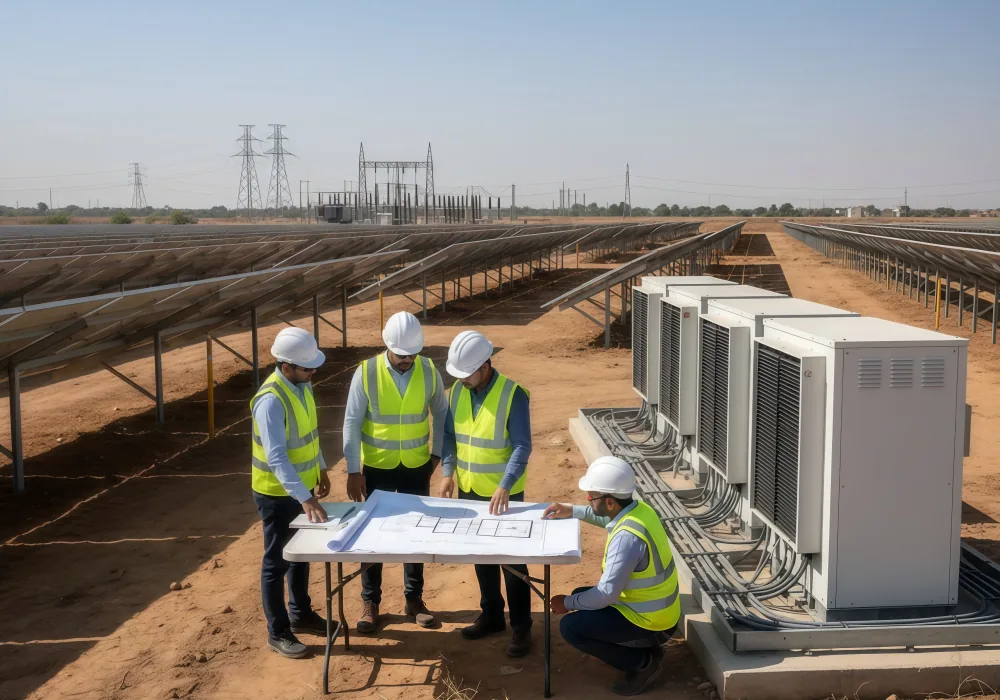
- Constructability review before procurement lock-in
- Performance monitoring integration aligned to IEC 61724-1 monitoring philosophy
This is how Innocepts Solar tackles repeat PR drop and chronic solar plant underperformance.
Solar plant underperformance is not “bad solar.” It’s usually design and engineering debt—paid later through PR drop, hotspots, mismatch losses, derating, and downtime. The fastest way to protect generation is to prevent the top solar EPC design mistakes before the first module is installed.
If you’re serious about PR improvement solar outcomes, insist on an EPC who can show the loss model, the electrical discipline, and the monitoring architecture clearly. That’s the engineering standard Innocepts Solar aims to set.
FAQ's
Solar plant underperformance is when actual generation is consistently below modeled or contract-expected generation due to combined controllable losses.
Layout shading, soiling, mismatch, thermal derating, downtime, and weak monitoring are frequent drivers.
Compare modeled vs actual yield, PR trends, inverter availability, and alarms using consistent monitoring methods.
Yes—IEC 61724-1 provides structured guidance to measure, analyze, and compare PV performance data.
Mismatch increases when strings/MPPTs combine non-uniform irradiance, temperature, or module performance—reducing array output.
Poor ventilation and high ambient temperatures force thermal derating and increase trip probability.
Wrong DC/AC creates avoidable clipping losses or poor inverter loading; simulation-based sizing is best practice.
Soiling reduces effective irradiance; without an engineered cleaning and monitoring plan, PR drifts downward.
Microcracks, PID, and hotspot-related degradation pathways can reduce output and increase failures.
Voltage excursions, outages, and settings issues can cause trips and lost export; interconnection rigor helps.
Innocepts Solar uses a loss-waterfall approach across layout, mismatch, wiring, thermal behavior, availability, and grid interface, backed by monitoring discipline.
If PR drops persist beyond cleaning/O&M actions, or if hotspots/trips recur, Innocepts Solar can run a design-to-performance diagnostic.